



How to Know If a Video Is AI Generated or Real
 By Daniel Walker
AI-generated videos are becoming so realistic that even experienced viewers can struggle to tell what's real and what's synthetic. From social media clips and viral ads to news footage and celebrity videos, AI video content is spreading fast-and not always transparently. This creates real risks, including misinformation, impersonation, and manipulated narratives.
In this guide, you'll learn how to tell if a video is AI generated using a combination of visual inspection, motion analysis, audio cues, and logical context checks. With the right awareness, you don't need advanced tools-just sharper observation skills.
Part 1. What Does "AI-Generated Video" Mean?
In simple terms, an AI-generated video is a piece of visual media created using artificial intelligence algorithms rather than traditional filming. Unlike traditional videos that capture light through a camera lens, AI videos are "synthesized" from vast datasets of existing imagery.
Common Types of AI Video:
- Text-to-Video: Creating a full scene simply by typing a description (e.g., "A golden retriever surfing in Hawaii").
- Image-to-Video: Taking a static photo and using AI to animate it with realistic motion.
- AI Avatars / Talking Heads: Digital humans that "speak" a script with synchronized lip movements, often used for training or marketing.
- Deepfakes: Replacing a person's face or voice in an existing video with someone else's likeness.
Part 2. Why It's Getting Harder to Tell AI Videos Apart
In 2026, models like Kling 2.5 Turbo and VEO 3 have significantly reduced the "uncanny valley" effect. Here is why your brain might be tricked:
- Natural Physics: Modern AI now understands gravity and fluid dynamics better, making hair and clothing move realistically.
- Cinematic Filters: AI often applies high-end color grading and "film grain" that hides pixel-level artifacts.
- Social Media Compression: When a video is uploaded to platforms like Instagram or X, the quality drop-off often masks the subtle glitches that would reveal it as AI.
Part 3. How to Tell If a Video Is AI Generated
To catch a deepfake, you need to look past the "vibe" and focus on the technical inconsistencies.

Visual Clues That a Video May Be AI Generated
When watching a person in a suspicious video, the first place to look is their eyes and mouth. Human eyes have a natural "wetness" and reflect light in specific, sharp patterns, whereas AI eyes often look slightly "flat" or glassy. You should pay close attention to the blinking-real humans blink at irregular intervals, but AI often generates rhythmic, robotic blinking or skips it entirely. Additionally, look at the teeth when the person speaks; AI frequently struggles to define individual teeth, often rendering them as a blurry white "unitooth" or causing them to shift and change shape mid-sentence.
Key Red Flags: Pay attention to irregular blinking patterns, blurry dental structures, and a lack of natural light reflection in the pupils.
Motion and Physics Errors to Watch For
While AI has improved at simulating gravity, it still creates "dream-like" physics errors. Real objects have weight and momentum; when a person walks, their head bobs and their weight shifts visibly. In AI videos, characters often seem to "glide" or "float" across the ground without a true sense of gravity. Another common error occurs with clothing and hair; in a real video, wind affects these elements realistically, but in AI videos, they may move in a fluid, "liquid" way that defies the laws of physics or clip through the character's body.
Key Red Flags: Watch for a lack of "weight" in movements and clothing or hair that flows like liquid rather than reacting to wind and gravity.
Audio and Lip-Sync Red Flags
The audio track often reveals what the eyes miss. In 2026, AI voices can sound incredibly human, but they often lack the "micro-emotions" of real speech, such as subtle intakes of breath or changes in pitch based on the meaning of a sentence. Most importantly, check the synchronization between the mouth and the sound. During fast speech or complex words (specifically those involving the letters B, M, and P), the AI's lip movements may lag or fail to close the mouth entirely. If the audio is "too clean"-meaning there is absolutely no background noise or room atmosphere-it is likely a synthesized voice-over.
Key Red Flags: Listen for "perfect" audio lacking ambient noise and watch for lip movements that don't quite match hard consonant sounds.
Contextual and Logical Signs
Finally, step back and look at the logic of the scene. AI often generates backgrounds that make no sense upon closer inspection-street signs with gibberish text, clocks with thirteen hours, or stairs that lead to nowhere. Ask yourself if the event being shown is actually plausible. If a video shows a high-profile politician in a casual setting saying something completely out of character, and the video has no original source or metadata, the context suggests it is a deepfake. AI-generated content often looks "too perfect" or cinematic for a supposedly "leaked" or casual mobile phone video.
Key Red Flags: Look for gibberish text in the background, impossible architecture, and a lack of verifiable metadata or a reputable source.
Part 4. Pro-tip: Generate Video with HitPaw VikPea
While identifying AI is important for safety, using AI for creativity is the future. If you want to create videos so realistic they pass the "eye test," HitPaw VikPea is the ultimate all-in-one workstation.
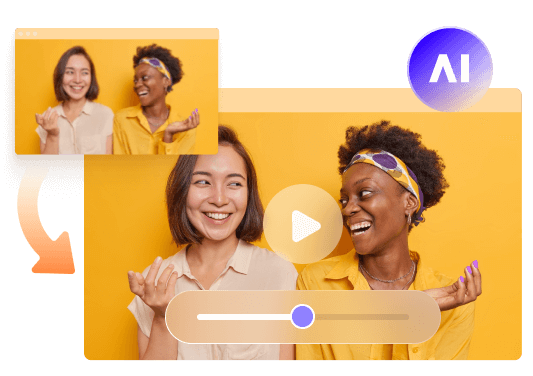
HitPaw VikPea is an AI video generator and enhancer that allows users to create videos using advanced generative models. It demonstrates how modern AI video generation works at a conceptual level.
How AI Video Generators Work
- Convert text or images into motion sequences
- Use AI motion synthesis to simulate camera movement and physics
- Apply either stylized or realistic visual outputs depending on the model
Why Choose HitPaw VikPea?
HitPaw VikPea integrates the world's most advanced AI video models into one interface. Instead of jumping between different websites, you can access:
- Kling 2.5 Turbo & Hailuo 2.3: For industry-leading motion and character consistency.
- Google VEO 3: For hyper-realistic 4K textures and native audio syncing.
- Pixverse 5.0 & Seedance 1.0 Pro: Perfect for stylized, cinematic, or experimental visuals.




How to Generate Your Own AI Video:
Step 1. Launch VikPea:Open the software and select the AI Video Generator module. Choose from Image to Video, Text to Video, or Creative Effects.
Step 2. Choose Your Input:Upload a reference image (Image-to-Video) or type a descriptive prompt (Text-to-Video).
Step 3. Select Your Model:Pick a model like VEO 3 for realism or Kling for complex movements.
Step 4. Generate & Export:Click Generate button to start processing the video. Once generated, you can download the video to computer, or use the built-in AI Video Enhancer to upscale your result to 4K or 8K clarity.
Part 5. AI Video FAQs
Look for inconsistencies in facial details, unnatural motion, audio mismatches, and missing contextual information. AI videos often fail at fine realism and logic.
Some tools attempt detection, but they are not 100% reliable. Human observation combined with context checking is still essential.
AI videos can spread misinformation, enable impersonation, and blur trust in visual media. They also lack genuine human emotion and real-world accountability.
Conclusion
AI-generated videos are here to stay-and they offer real value in creative, educational, and commercial fields. The key isn't fear, but awareness. By sharpening your ability to spot visual flaws, motion errors, audio mismatches, and logical gaps, you can navigate AI content with confidence. Tools like HitPaw VikPea show both the power and the limits of AI video generation, reminding us why critical viewing skills matter more than ever.
Leave a Comment
Create your review for HitPaw articles