





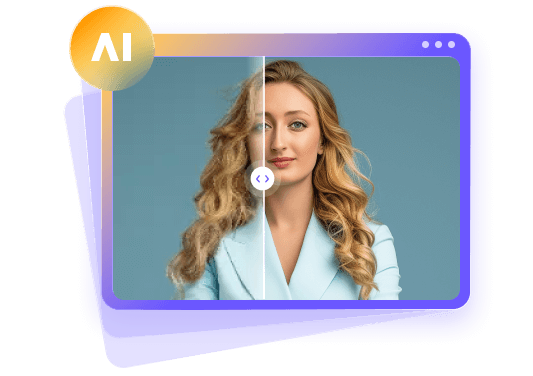
Digital Film Photo Enlargers: The Future of Photo Enhancer
 By Daniel Walker
Film photography is not dead. In fact, it is making a strong comeback. They look real, warm, and full of life. However, when you want to print and enlarge film pictures, everything becomes difficult quickly. Traditional tools are time-consuming, space-consuming and skill-consuming. Photographers have a hard time dealing with dark rooms, chemicals, and outdated equipment that cannot be easily maintained. For beginners, this process can be even more difficult.
This is what makes a lot of people seek a more productive way of handling a film photo enlarger. In 2026, things are changing fast. With digital devices, it has become easy to scan, enlarge, and enhance the quality of film photos without compromising their quality. These new solutions are time-saving, energy-saving and produce clean results.
What Is a Film Photo Enlarger
A film photo enlarger is a machine used in darkrooms. Its job is simple: make film photos bigger. Since the early 1900s, it has been an important element of photography. At that time, photographers had to find a method of enlarging small negatives into full-size prints for albums, galleries or exhibitions.
How it works
The working principle is very simple. The light runs through the film negative, and the lens magnifies the size of the image. The magnified image is projected on the photo paper, which is then developed by using chemicals to bring out a real photograph with distinct clarity and contrast. In this process, photographers have complete control over exposure, contrast and composition.
Purpose and Advantages
The old film photo enlargers allow complete manual control. Traditional film photo enlargers bring out the printed photographs and also enable photographers to control image size, detail, exposure, contrast and cropping manually. Their key features are that they can produce real analogue prints, all adjustments are made manually, and the touch of real film is still present.
Although in the digital age, certain photographers still favor this form of control as they believe it provides a particular appearance that cannot be easily created in digital makeup.
Ideal Scenarios
The film photo enlarger is ideal if:
- You have access to a darkroom.
- You print photos frequently.
- You like working with film manually.
- You are already aware of how to enlarge film photos using the traditional method.
Traditional enlargers can be confusing for beginners or casual users. That's why many are now exploring how to develop film without photo enlarger tools digitally.

Great Challenges of Traditional Film Photo Enlargers
Film photo enlargers have played a crucial role over the decades, but today they are associated with a number of challenges. The traditional enlargers are not as convenient as they used to be because many photographers encounter many challenges today.
Maintenance and Replacement Parts
The old film photo enlargers always need maintenance. Lenses, carriers, and bulbs degrade with time. It may be difficult to find replacement parts, particularly for older models. In some cases, the components are costly or no longer available. This makes it difficult to maintain enlargers in the right shape, especially for beginners and even experts.
High Initial Investment
A film photo enlarger and a darkroom may be costly to set up; they need the enlarger itself, lenses and bulbs, photo paper and chemicals, adequate ventilation, and workspace. This high cost can discourage newcomers from learning how to enlarge film photos the traditional way.
Steep Learning Curve
A film photo enlarger is not easy to use. It takes time to learn how to enlarge film photos. Because of the high error rates in traditional photo enlargers, photographers must learn to control exposure time, contrast, chemical development, and cropping and composition.
As mistakes are common, the learning curve of this process is steep, time-consuming, and requires accuracy. So this technique becomes daunting and challenging for the beginner. The majority of the population now resides in small houses and lacks a darkroom. That's why traditional film photo enlargers are not feasible now for beginners or casual users.
That's why many are exploring how to develop film without photo enlarger tools digitally. With digital solutions, anyone can scan, enlarge and improve their film photos without occupying space in a darkroom, using chemicals or having advanced knowledge.
Best Resolution for Scanning and Enlarging Film Photos in 2026
Many photographers now scan their film. Scanning helps store memories safely. But there is a problem. Scanned photos often have noise. They look soft. Details disappear. With digital tools, it is possible to enhance, enlarge, and restore film photos without any darkroom or chemicals. You can save time, eliminate errors and even upscale images to 4K without blurring them.
1. HitPaw FotorPea
HitPaw FotorPea is a new solution that substitutes most of the functions of a film photo enlarger. It helps to enhance photos to 4K with a single touch, so it is ideally suited for beginners and professionals alike to scan and store high-quality photos. No learning curve. No stress.
Key Features
- One-click AI enhancement
- Noise reduction of scanned film
- Naturally preserves film grain
- Supports up to 4K/8K resolution
- Easy-to-use interface
Best for:
- Beginners who need a quick, single-click answer.
- Regular photographers scanning film pictures.
- Anyone who learns how to enlarge film photos digitally.
- Users who want high-quality 4K enhancements but not in a darkroom.
How to Enhance Film Photos Easily
Step 1: Scan your film photo into your computer.
Step 2: Open HitPaw FotorPea and begin to enhance the photo.




Step 3: Click the Enhance Photo Now. And then upload or drag & drop your scanned image.
Step 4: Choose the "AI Upscale" mode and adjust it according to your requirements.
Step 5: Export the enhanced photo in high quality.
2. Adobe Photoshop
Adobe Photoshop is a very helpful but complicated image editing tool. It is an industry application that is used by photographers worldwide. This tool offers advanced photo enhancement, correction and creative editing capabilities. However, Adobe Photoshop requires time and practice to learn. Its broad selection of tools can initially be overwhelming for beginners.
Features
- State-of-the-art resizing and upscaling.
- Noise reduction and enhancement.
- Color correction.
- Precise layer-based editing.
 Pros
Pros
- Full professional control.
- Industry standard for editing.
- Works for large prints.
 Cons
Cons
- Steep learning curve.
- Time-consuming for beginners.
- Subscription-based.
Best for:
- Experts or professional photographers.
- Users who prefer complete freedom in photo editing.
- Users who upgrade a film photo enlarger to accurate digital controls.
- Big prints or extensive photo restorations.
3. Let's Enhance
Let's Enhance is an AI-driven web-based photo-enlarging and photo-enhancing tool. It is easy, quick, and does not need to be installed.
Features
- AI scaling and enhancement.
- No installation, online access.
- Multiple image processing at a single time.
Pros
- Beginner-friendly.
- Fast results.
- Works directly within the browser.
Cons
- Limited free version.
- Needs an internet connection.
- Reduced ability to control finer details compared to Photoshop.
Best for:
- Beginners who want a simple AI enhancement
- Small-to-medium enlargements and quick fixes.
- Users who are in a hurry and do not want to install software.
FAQs
A photo can be enlarged using digital tools to provide a quality image without distorting the pixels. The AI-powered apps like HitPaw FotorPea can produce details without compromising the appearance of the picture, and it is always clear and sharp.
Modern digital solutions enable the process of scaling the size of the scanned film photos to 4K or higher, depending on the quality of the initial image. AI upscaling software, like Let's Enhance, can be used to make large prints without blur or noise distortion.
Yes! By scanning the old film photos, the memories are preserved and can be readily enhanced. Once scanned, they can be digitally enlarged, restored and shared. This process is safer and less time-consuming compared to a traditional film photo enlarger.
Conclusion
The traditional film photo enlargers have their charm; however, they come with their complications: they are expensive, complex to set up, and they have a steep learning curve. Film photos can now be scanned, enhanced and enlarged effortlessly using digital tools and maintain their quality. HitPaw FotorPea is one of them. It is quick, easy-to-use, and is capable of transforming your scanned film photos into 4K/8K with a single click. It does not require a darkroom, chemicals or complicated skills.
When you need to save time and effort and have a fun time with film photos, then be smart and use HitPaw FotorPea in 2026. It combines convenience, high quality, and simplicity.
Leave a Comment
Create your review for HitPaw articles