





Understanding the 4x6 Photo Size in Pixels, Inches, Cm & Mm
 By Daniel Walker
4x6 print dimension serves as the universal standard which photographers and printers use to preserve their memory recordings. People need to understand 4x6 dimensions because they need to know its actual size. Your images will achieve perfect sharpness and accurate framing when you know the exact measurements of your photographs, which apply to both family vacation prints and desk display frames of your most treasured moments.
The 4x6 photo represents the traditional postcard dimension which allows standard albums and frames to display it without any alterations. The digital era requires people to understand both physical dimensions and 4x6 pixel measurements because this knowledge enables accurate digital file conversion to printed media.
Part 1: How Big is 4x6 Photo
Definition of 4x6
The 4x6 photo size shows a measurement of 4 inches by 6 inches. The industry standard for photofinishing print sizes uses this dimension which international paper size standards designate as "4R". The aspect ratio of this format matches the shooting capabilities of most digital cameras and smartphones, which makes it the most preferred option for creating physical prints.

Dimension Tables
The 4x6 dimensions show their measurements in three different systems, which include pixels and inches and metric units, to help your photos look their best on screens and in printed form.
| Measurement Unit | Width | Height |
|---|---|---|
| Inches | 4" | 6" |
| Centimeters | 10.16 cm | 15.24 cm |
| Millimeters | 101.6 mm | 152.4 mm |
| Pixels at 72 DPI (Web/Screen) | 288px | 432px |
| Pixels at 150 DPI (Low Quality Print) | 600px | 900px |
| Pixels at 300 DPI (High Quality Print) | 1200px | 1800px |
| Aspect Ratio | 2:3 | 2:3 |
Real-Life Size Experience
The 4x6 inch photo size becomes visible through pixels which demonstrate its comparison to actual dimensions.
- In your hand: The object has dimensions which match those of a standard holiday postcard. The size of the object enables people to see facial features but allows for single-handed carrying.
- On a phone screen: The display area of modern large-screen smartphones reaches approximately 4x6 print dimensions when users operate their devices in horizontal orientation.
- On a computer display: The standard monitor displays 4x6 dimensions with actual size appearing larger than printed output until users select the "print size" zoom option.
Part 2: Common Uses of 4x6 Photos
- Family and personal photo printing: The 4x6 photo size which measures 1200x1800 pixels creates an ideal moderate file size for printing multiple family archive photos. The dimension serves as the standard size which people use to print their pictures of their children and pets and their regular activities.
- Travel and vacation memories: Travelers prefer this dimension because it fits conveniently into their luggage. You can print hundreds of vacation photos to physically share with friends without the bulk of larger portraits.
- Photo albums and scrapbooks: The 4x6 size serves as the ultimate standard for photo albums. Most photo albums available in retail stores include plastic sleeves that match the dimensions of 4x6 prints.
- Desk and small-frame displays: This size works perfectly as space-saving decor for both office desks and bedside tables. The design adds sentimental value to the space while maintaining space requirements for both work areas and nightstands.
- Event keepsakes and instant prints: The photo boothswhich wedding and party organizers use generate both strip prints and complete 4x6 photo prints. The products function as instant party favors which guests can easily carry in their purses or pockets.
- Creative uses like postcards and DIY crafts: Photographers commonly use 4x6 standard postcard size to print their work which they send to clients and friends through mail. It works well for building DIY collages and vision boards.
Part 3: How to Prepare a 4×6 Photo for Printing (Practical Tips)
The print quality achieves its best results through proper management of digital file content. The optimal results from 4x6 display require you to use exact pixel dimensions.
1. Choose optimal DPI
Dots Per Inch (DPI) shows its importance for printing purposes. Printers operate at 300 DPI while screens display content at 72 DPI. Your file needs to have dimensions of 1200 x 1800 pixels which equals 4 inches multiplied by 300 and 6 inches multiplied by 300. Lower than this pixel count in a 4x6 file will result in an image that appears blurry and pixelated.
2. Handle white space / composition techniques
Printers use "bleed" printing which means they cut edges of printed images. You should maintain distance from essential subjects to all 4x6 pixel boundaries. Your square Instagram post requires you to either crop the photo or add white margins to achieve 2:3 aspect ratio.
3. Keep file formats (PNG vs JPG)
The JPG format works best for photographic images that contain detailed color variations and gradual color transitions. The compression method enables JPG files to maintain smaller storage requirements.
The PNG format serves better for images that contain text or defined graphic elements while it requires more storage space. High-quality JPG files serve as the standard choice for typical photographic images.
4. Enhance clarity with AI tools
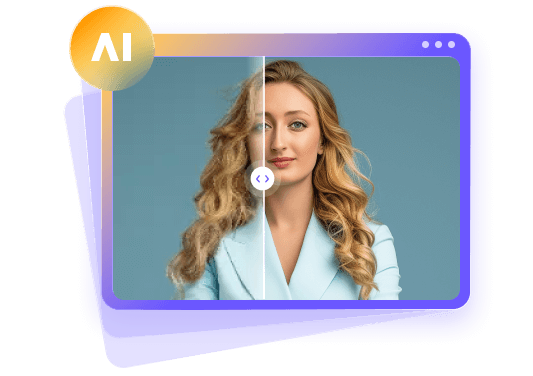
Your photo may show signs of age or display low quality through its blurry or low-resolution appearance. You need to use AI tools for resolution upscaling before you print because your photo needs to match 4x6 inch pixel requirements without any quality degradation.
Part 4: Enhance Your 4x6 Photos to 4K with AI
You need to use different methods than standard resizing when you want to print your low-quality image at 4x6 or larger sizes. HitPaw FotorPea provides users with an efficient tool for enhancing image quality through its intelligent texture restoration and advanced upscaling capabilities. The tool examines all elements of an image to boost its details and works on both old photos and low-resolution downloads and blurry mobile shots.
The AI Photo Enhancer enables users to restore missing details and enhance depth while producing high-quality print output, which requires only a few mouse movements.
Key Features of the AI Photo Enhancer:
- Detect and correct motion blur and focus issues to restore sharpness and image clarity.
- Reconstruct facial features and skin textures naturally, avoiding plastic or over-smoothed results.
- Recover fine details like hair strands, fabric textures, and background elements.
- Convert small thumbnails into high-definition 4×6 photos at 300 DPI for print use.
- Upscale images to 4K resolution while preserving lighting, color accuracy, and edge definition.




How to Operate HitPaw FotorPea for Photo Enhancement
Step 1: Upload Your Photo
The user needs to start HitPaw FotorPea program and drop their low-resolution file into the main window.
Step 2: Select AI Model
The user needs to select which AI model to use based on their portrait needs Face Model or their landscape needs General Model.
Step 3: Preview and Export
The user needs to click "Preview" to see the enhancement. The user will export their clear high-resolution image which they can use for printing after they finish their work.
FAQs
Yes but usually social media platforms compress images. The 4x6 print ratio (2:3) works for Pinterest and Facebook vertical posts but Instagram prefers 4:5. The 4x6 dimensions need you to make small pixel adjustments before sharing on social media platforms.
The best standard requires 300 DPI The best standard requires 300 DPI for 4x6 printing The best standard requires 300 DPI. The required pixel dimension reaches 1200 x 1800 pixels. The print will appear grainy because anything below 150 DPI creates this effect.
Yes. The traditional method of resizing leads to unexpected blur results whereas HitPaw FotorPea AI upscaler uses advanced technology to add missing pixels while maintaining edge definition and all visible elements.
Conclusion
The measurement of a 4x6 photo size requires more than simple ruler measurement. The correct 4x6 pixel dimensions should be used as 1200 x 1800 at 300 DPI because it enables your saved memories to be printed correctly from your display screen to physical photo albums. Pre-printing resolution verification needs to be performed because it protects you from future printing issues that will lead to your disappointment.
The best solution for your printing needs is HitPaw FotorPea. The system provides users with the most dependable method to boost their image quality by enhancing resolution and achieving perfect 4x6 prints.
Leave a Comment
Create your review for HitPaw articles