




The Ultimate Guide to Aspect Ratio for Stable Diffusion 2026
 By Daniel Walker
Stable Diffusion has become highly popular and advanced since its launch in 2022. It has managed to get a large base of users that ranges from indie artists to corporate marketing. A major reason behind Stable Diffusion's popularity is that it is an open-source AI image generator that anyone can use.
But here's the problem most beginners face: you can type a beautiful prompt, hit generate, and the result still looks weird. For example, the faces can be squished. Bodies might have three arms. Or the backgrounds melt into chaos. Most of such issues happen not because of the prompt but because of not using the best aspect ratio for Stable Diffusion
Therefore, it is vital to choose the best aspect ratio for Stable Diffusion to get high-quality images. In this guide, we'll break down the importance of aspect ratios, along with the details of the cleanest Stable Diffusion image size you can use to help you get crisp 4K results.
Part 1: Why Your Stable Diffusion Images Break
Images created by Stable Diffusion can break or be distorted because it is ultimately a model that is trained on millions of images. Many of these images are cropped or resized as per very specific dimensions during model training. So, if you ask it to create an image of completely new dimensions, it can result in distorted results.
The most important thing to know is that the original Stable Diffusion 1.5 was trained on 512x512 pixels. SDXL increased the best aspect ratio for Stable Diffusion to 1024x1024. Moreover, SD3 and newer variants of Stable Diffusion can handle wider ranges, but they still have a balanced approach.
Here are the common reasons why images break:
- Extra limbs: A third arm can appear on a portrait because the canvas was stretched too wide
- Face asymmetry: This includes eyes at different heights, lopsided jawlines, and drifting noses
- Stretched objects: Cars can look like accordions, and buildings can lean at impossible angles
- Background collapse: Repeated patterns, melted textures, surreal blobs where landscapes should be can occur due to the wrong aspect ratio
All of these issues can be resolved or at least mitigated by aligning your canvas with what Stable Diffusion was trained on. It will also dramatically increase the AI image resolution, and you won't have to keep wasting credits on broken generations.

Part 2: Best Aspect Ratios for Stable Diffusion
So, which dimensions actually work on Stable Diffusion? Let's walk through the best aspect ratio for Stable Diffusion to get clean results consistently.
The 1:1 square is the go-to aspect ratio. It's what SD was originally trained on. In 2026, the 1:1 aspect ratio still remains the best aspect ratio for Stable Diffusion because it is the most common one as well. It is used in avatars, profile photos, e-commerce thumbnails, and Instagram posts. If you are a new user of Stable Diffusion, you should start with the square aspect ratio.
However, if you are handling portraits, such as images of people, characters, or fashion shots , you will want a taller frame. In this case, 3:4 and 4:5 become the best aspect ratios for Stable Diffusion because they naturally fit on a canvas, and they line up nicely with Pinterest and Instagram portrait formats.
You can also try out the 16:9 aspect ratio as it is the universal landscape ratio. It's perfect for desktop wallpapers, YouTube thumbnails, and any image that requires horizontal space. Other aspect ratios, such as 21:9 and 9:16, are also the best aspect ratios for Stable Diffusion for specific situations like cinematic shots and vertical content.
Here's a quick reference table you can bookmark:
| Aspect Ratio | Common Use | Horizontal Size (SDXL) | Vertical Size (SDXL) | Small Tip |
|---|---|---|---|---|
| 1:1 | Avatars, e-commerce, social media posts | 1024 | 1024 | Safest ratio for any model |
| 3:4 | Portraits, magazine covers, Pinterest | 896 | 1152 | Ideal for character art and fashion shots |
| 4:5 | Instagram portraits, product shots | 912 | 1144 | Slightly less tall than 3:4, feels more natural |
| 2:3 | Photography, book covers | 832 | 1216 | Classic DSLR aspect ratio |
| 9:16 | TikTok, Reels, mobile wallpapers | 768 | 1344 | Stretched figures |
| 16:9 | YouTube thumbnails, desktop wallpapers | 1344 | 768 | Best for landscapes and cinematic scenes |
| 21:9 | Cinematic shots, ultrawide monitors | 1536 | 640 | Add "wide shot, cinematic" to prompt for best results |
| 4:3 | Classic photography, retro look | 1152 | 896 | Good for nostalgic or documentary-style images |
| 3:2 | Print photography, posters | 1216 | 832 | Standard 35mm film ratio, great for printable art |
| 5:4 | Medium format, art prints | 1088 | 896 | Subtle portrait feel without going fully vertical |
Part 3: Best Practices for Stable Image Outputs with AI in 2026
Even if you use the best aspect ratio for Stable Diffusion and the right Stable Diffusion image size at all times, there's still a limit on what Stable Diffusion can produce in high-qualuty. Most of SD models cap out at 1024-1536 pixels per side without producing artifacts.
So if you truly want to create a poster-ready 4K image without losing detail, you need to explore an alternative like HitPaw FotorPea.
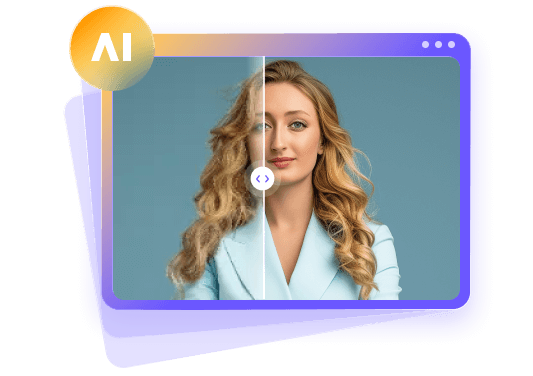
HitPaw FotorPea is an all-in-one AI image toolkit. It is built specifically for creators who generate or edit images at scale. It's especially powerful when you're working downstream of Stable Diffusion, so that you can take base generations and push them to print-ready, 4K-ready quality.
Key features of HitPaw FotorPea
- AI Enhancer: Upscale Stable Diffusion outputs up to 8x without losing sharpness.
- Face Refinement: Specifically retouches AI-generated faces to improve results
- Background Removal: One-click background removal
- Object Remover: Cleans up stray artifacts, duplicated limbs, or unwanted elements
- Photo Colorizer: Adds natural color to monochrome AI outputs.
- Batch Processing: Run enhancement across dozens of generations
How to use HitPaw FotorPea to enhance your Stable Diffusion images:
1.Download and install HitPaw FotorPea on your Windows or Mac.




2.Open the AI Enhancer module from the main dashboard.
3.Upload your Stable Diffusion output or any image by dragging the file in or clicking the import button.
4.Configure the enhancer as per your needs. For example, whether you want to restore details or fix portrait.
5.Upscale the image and export at your target resolution.
Part 4: How to Choose the Best Aspect Ratio
Let's sum up the best aspect ratio for Stable Diffusion, as well as any other AI image resolution:
- Portrait → 3:4 or 4:5: Choose when you are making images of people, characters, fashion, and product close-ups
- Landscape → 16:9: Perfect aspect ratio for scenery, wallpapers, and wide environmental shots
- Avatar → 1:1: The top choice for profile pictures and social posts
- Cinematic → 21:9: Perfect for cinematic shots and images used in storytelling and concept art
FAQs
The 16:9 ratio (1344x768 for SDXL) is the best aspect ratio for Stable Diffusion for landscape images.
You can get higher resolution images with Stabel Diffusion by generating at model's native resolution first (1024x1024 for SDXL), and then upscaling using a dedicated AI tool like HitPaw FotorPea.
Not directly. Stable Diffusion's optimum settings is anywhere between 1024-1536 pixels per side. However, for best results, you can use HitPaw FotorPea to generate as well as upscale up to 8x.
Conclusion
The bottom line is that by picking the right aspect ratio, you can quickly improve your Stable Diffusion results. Of course, your initial input and prompts matter, but following the simple tips and the best aspect ratio for Stable Diffusion can make the most impact.
Once you you're ready to push those clean generations into print, poster, or 4K territory, you should sign-up at HitPaw FotorPea to handle the heavy lifting. It gives you many features like AI Enhancer, face refinement, and batch upscaling features to turn your best Stable Diffusion outputs into production-ready images in just a few clicks.
Leave a Comment
Create your review for HitPaw articles