



Qwen Image 3.0 vs Midjourney: Which AI Image Tool Wins?
 By Daniel Walker
Though AI image tools can generate good looking images, many people are still frustrated by several issues, such as small, illegible text or dense layouts. Qwen Image 3.0 released by the Qwen team in July 2026 and claims to turn boring, simple artwork into substantial, understandably clear visuals that contain realistic, multilingual content and less problematic, knowledge-rich scenes. This review will go over the main features, the actual limits of the tool, the current pricing, how to use it, and compare it to its competitors, Midjourney and ChatGPT, to help readers choose the right tool for their creative work.
Part 1: What Is Qwen Image 3.0? Overview & First Impression
Qwen Image 3.0 is Alibaba Qwen's third generation foundation image model. Qwen revealed it on July 20, 2026, focusing on three core areas: rich content, true details, and deep knowledge. The model is designed to create difficult visuals such as newspaper images, storyboard images, menu images, exam images, poster images, technical slide images, and instructional material images. Compared to other AI image models, most of which concentrate on creating artistic images, this model is designed to create images for daily use.

What Type of AI Model Is It?
Alibaba Cloud takes text and images as inputs and generates an image as the output, meaning users can generate an image from a prompt or use an image for guidance. While some information about Qwen Image 3.0 is publicly available, the complete architecture and training details remain undisclosed. The 3.0 Pro model also should not be conflated with the older Qwen-Image model available through the company's open repository.
Who Is Qwen Image 3.0 For?
If you're a marketer, teacher, designer, publisher, or developer building a social media presence, then Qwen Image 3.0 can be the right fit for you. It is particularly beneficial for those who require multiple panels, labels, formulas or text in different languages all on a single visual. It can be used to create product and promotional materials by organizations, and tutors can use it to create diagrams and presentation graphics, as well as tutorial posters.
Problems It Solves
- Improves small and unclear text.
- Follows long and detailed prompts.
- Enhances faces, hair, skin, and textures.
- Organizes complex layouts and content blocks.
- Supports multiple languages and font styles.
- Creates maps, menus, diagrams, and interfaces.
Part 2: Qwen Image 3.0 Features & Real Performance Review
Qwen Image 3.0 has addressed multiple problems seen in AI-generated imagery. This version focuses on the following areas: coping with longer prompts, text that is easier to read, inclusion of realistic details, content in different languages, and better representation of layouts that are more complex. Here are the features with the benefits that they provide.
1. Handles Long and Detailed Prompts
This model can handle long and complex instructions of up to 4,000 tokens. Users can now prompt the model to design multiple sections of web pages or catalogs as one complex design.
2. Produces Clearer Text
Qwen Image 3.0 can create readable text sizes as small as about 10 pixels. It also has the ability to add lines of text, labels, superscripts, symbols, and form text.
3. Creates Realistic Fine Details
The model can improve facial features, hair strands, skin and fabric textures, and lighting. It can also be used to photograph and display products in a comprehensive and realistic way.
4. Supports Multilingual Content
In this model, multilingual content can be easily constructed with over 20 supported font styles across 12 languages. This model is useful for creating posters, menus, flyers, lessons, and social media resources.
5. Builds Complex Visual Layouts
The model can design a page with multiple Panels, Blocks, Labels, and visual elements. It can also be used to create concept storyboards, layouts for pages, and educational design materials.
Real Performance Review: Strengths with Limitations
Examples of its use include detailed prompts, portrait images with a natural level of detail and skin, legible text, and other elements arranged in a complex manner. Images depicting natural detail and balanced lighting with various expressions contain proper and well-aligned elements.
Text can be rendered legible, even with multilingual words. However, when text becomes more complicated, like with longer sentences, there can be spelling errors, missing text, or incorrect numbers.
Images created with the model may contain weak hands, unnecessary repetition of objects, and superfluous design elements. Because of this, users should be sure to check all details before publishing any images.
Part 3: How to Use Qwen Image 3.0 Step-by-Step Guide
Because this model is designed for a general audience, users do not need to have advanced design knowledge to create prompts and generate useful results.
Steps to Use Qwen Image 3.0
Step 1.Open Qwen Studio through a supported web browser or mobile application.
Step 2.Sign in to your account and select the image-generation option.
Step 3.Write a detailed prompt describing the subject, layout, exact text, language, visual style, colors, background, lighting, and aspect ratio. Describe complex sections in the correct order.
Step 4.Press Enter and wait for the result. Review the faces, hands, labels, numbers, formulas, logos, and small text at full size.
Step 5.If the image meets your requirements, click the Download icon to save it to your device.
Part 4: Qwen Image 3.0 Pros, Cons & Pricing
It is important for all potential users of this model to understand its advantages and disadvantages. Qwen Image 3.0 excels at generating realistic images filled with text when provided with detailed prompts.
 Pros
Pros
- Handles long and detailed prompts.
- Produces clear small text and multilingual layouts.
- Creates realistic faces, hair, fabric, and lighting.
- Works well for infographics, lessons, posters, and interfaces.
- Can be tested through Qwen's consumer tools.
- Supports both text and image input.
 Cons
Cons
- Text and facts still require human checking.
- Complete model details and weights are not public.
- The Pro API remains in an early access stage.
- Its one-request-per-minute rate limit is low.
- Workflow tools are less complete than mature creative suites.
- Complex layouts may still require several attempts.
Pricing
Qwen Image 3.0 can currently be used for free through Qwen Studio and does not require a subscription. The image generation tools are available for use after signing up for an account and do not require a monthly payment. Usage limits and even availability may vary between regions.
Part 5: Qwen Image 3.0 vs Midjourney vs ChatGPT: Which AI Image Model Is Better?
Each AI tool excels in a distinct category. Qwen Image 3.0 specializes in dense and functional graphics, while Midjourney stands out for finished and polished artistic styles, and ChatGPT offers a simple conversational design and image creation and editing process.
| Area | Qwen-Image-3.0 | Midjourney V8.2 | ChatGPT Images 2.0 |
|---|---|---|---|
| Realism | Excellent fine details | Excellent styled realism | Strong realism and scene logic |
| Creative Style | Wide range, but utility comes first | Best artistic direction | Flexible through plain prompts |
| Text Rendering | Main strength with 12 languages | Improving, but less reliable | Very strong text and layouts |
| Prompt Understanding | Handles long, structured briefs | Understands visual terms and parameters | Best for conversational revisions |
| Editing Workflow | Newer image-guided workflow | Remix, Pan, Zoom, and Vary Region | Easy prompt-based editing |
| Best for | Infographics, lessons, pages, and UI ideas | Concept art, advertisements, fashion, and mood | General creation, editing, and teamwork |
| Pricing | Free to use; API price is not public | Plans cost $10 to $120 monthly | Free with limits; Plus costs $20 monthly |
Which One Should You Choose?
Choose Qwen Image 3.0 If: You need a lot of text within one image such as long briefs, small labels, formulas, technical notation and multiple sections in different languages.
Choose Midjourney If: You value visuals of mood and fashion, as well as artistic style and dramatic lighting, over text and structured information.
Choose ChatGPT If: You want to create an image with step-by-step instructions and adjust drawings using reference images, as well as brainstorm with an AI companion.
Part 6: Best AI Image Workflow to Enhance AI-Generated Images by Qwen Image 3.0
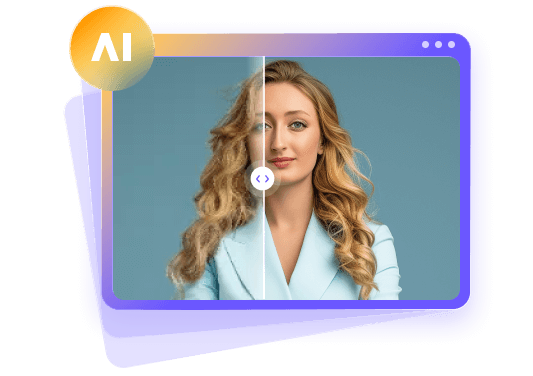
AI-generated images often need sharpening and can have visible noise and low resolution. These imperfections show up even more when images are expanded. When used on a website, social media, or in printed images, imperfections become even more distracting. Simple solution workflows can be used to remove artifacts and increase the overall quality of the image for final use. For this purpose, HitPaw, Fotor, and Pea can be perfect solutions.
HitPaw FotorPea
HitPaw FotorPea is an AI-powered photo enhancement and editing tool built for both beginners and experienced creators. It can sharpen blurry images, reduce noise, improve faces, restore damaged photos, and increase resolution. Its selection of AI models helps users improve Qwen-generated visuals while keeping the original layout, style, colors, and creative direction unchanged during processing.
Key Features of HitPaw FotorPea
- Enhance Qwen-generated images to 4K for sharper final output.
- Create fresh visuals through AI image generation from detailed prompts.
- Manage an all-in-one workflow for generating, editing, and enhancing images.
- Perform old photo restoration to repair scratches and faded colors.
- Navigate its user-friendly interface without needing advanced editing experience.
- Access advanced model support for faces, noise, color, and sharpness.
- Remove backgrounds automatically while keeping subject edges clean and accurate.
- Process multiple images together to save time on larger projects.
Steps to Enhance a Qwen-Generated Image
Step 1.Download and install HitPaw FotorPea on your computer.




Step 2.Open HitPaw FotorPea and select Enhance Photos Now from the main dashboard to improve your Qwen generated image.
Step 3.Now upload the Qwen Image 3.0 generated image, then select the AI model that best meets your enhancement needs.
Step 4.Preview the enhanced image and compare the details carefully before saving it.
Step 5.Export the enhanced photo once you are satisfied with the final result.
FAQs
It is Alibaba Qwen's third-generation foundation model for detailed image creation. It focuses on long prompts, readable text, realistic details, multilingual copy, and complex visual layouts.
Yes, Qwen Image 3.0 is free to use through Qwen Studio without a paid subscription. Users may need to sign in, and usage limits can apply.
It is stronger for dense text, formulas, and structured pages. Midjourney remains a better choice when artistic style and dramatic visual mood matter most.
It can create posters, menus, maps, lessons, storyboards, interfaces, portraits, product ideas, advertisements, and technical slides. Users should verify all words, numbers, trademarks, and facts.
Everyday users can try it through Qwen Studio or supported Qwen applications. Developers can request 3.0 Pro through Alibaba Cloud Model Studio where regional access is available.
Conclusion
Qwen's new image model stands out for long prompts, readable small text, fine details, and complex layouts. Midjourney still leads in artistic style, while ChatGPT offers easier conversational editing. Qwen's main limits include early access, low API limits, unpublished developer pricing, and the need to check every word and fact. After selecting a result, HitPaw FotorPea can sharpen, denoise, and upscale it for cleaner final use.
Leave a Comment
Create your review for HitPaw articles