


Midjourney V8 Review: What's New, How It Compares to V7, and When to Use It
 By Daniel Walker
For now, Midjourney v8 is still in alpha & sits alongside V7, rather than supplanting it. That in itself says something. It shows that these two models have been designed to serve different creative processes. If you want to get the best out of Midjourney, you'll need to get to grips with the differences between them - rather than just experimenting & hoping for the best.
Part 1: Midjourney V8 Alpha - So What's New?
At the core of the MidJourney v8 release is a fundamental overhaul of the underlying architecture. V8 has been built from the ground up to give even more attention to physical accuracy and literally interpreting the prompt.
Those improvements are plain to see in MidJourney v8 features.
One of the first things that stands out about MidJourney v8 images is how much better they get at drawing people. Hands, facial structure, and body proportions are now consistently accurate - a big step up from previous versions. This, in turn, makes MidJourney v8 images a lot more viable for professional uses where you need realistic portraits.
Lighting, too, has been given a serious upgrade. Gone is the over-reliance on 'atmospheric glow' - instead, V8 simulates real-world lighting the way it really is, complete with reflections, shadows & material interaction all coming together to look right at home.
And then there's the way it handles your prompts - V8 no longer just 'gives it a go' with your input. Rather, it actually tries to interpret everything you tell it as literally as possible - which completely changes the way you write your prompts from now on.
Part 2: Midjourney V8 vs V7 - Its All About Style
When people talk about Midjourney v8 vs v7, they often fall back on the usual line about 'which one is better'. But that overlooks the really important point here - that these models produce totally different styles of image.
V7 is all about artistic interpretation - it gives you those warm, almost stylised images with a painterly feel. Even when you're aiming for realism, it still injects a bit of mood and aesthetic cohesion into the mix.
In contrast, V8 is a lot more like a camera - the images it produces are sharper, the tone is more neutral, and it's closer to real-world photography. There's less artistic bias - so more visual accuracy.
So that means very different use cases. V7 is better-suited for concept art, storytelling & mood-driven visuals. V8 is the go-to choice for product photography, architectural rendering & commercial imagery where getting the realism just right is more important than anything else.

Part 3: Prompt Behaviour - Getting the Most out of V8
One of the key differences between the Midjourney v8 comparison & V7 lies in how they handle prompts.
V7 was all about being an interpretive model - you could throw it a short, feel-good prompt & still get an image that really worked. It was good at filling in the gaps.
V8, on the other hand, is a much more precise executor. It doesn't just try to guess what you want - it follows the instructions you give it to the letter.
This changes everything when it comes to writing a V8 prompt. You can no longer get away with just jotting down a vague idea & hoping for the best. You need to give it much more structured inputs.
A good starting point for a V8 prompt would be to include:
- A clear definition of what you're trying to draw
- Description of the environment
- Lighting conditions - is it indoors/outdoors, sunny/cloudy, etc.
- Any camera/lens references - are you going for a wide-angle shot? etc
- Style constraints - do you want it to look a certain way? ( e.g., high contrast, low detail, etc )
Here's an example of what a structured prompt might look like:
"A modern kitchen interior with marble countertops, plenty of natural daylight coming in from the large windows, soft shadows, 24mm wide-angle lens, neutral colours all round, super high detail, realistic textures - just like the real thing".
This more structured approach is what's allowed Midjourney v8 to produce images that are so realistic they outperform earlier versions in a lot of situations.
Part 4: Style References & Character Consistency
One of the biggest improvements in Midjourney v8 alpha is the way it handles style & character control.
Style references in V7 are pretty flexible - they influence the output without dominating it. This is great for creating something original, but it can be a bit hit-or-miss when it comes to consistency.
In V8, style references are applied a lot more strictly. The colours, textures & lighting pretty much have to match the reference image exactly. This is super useful if you're working on a brand that needs to look really consistent, but it can sometimes feel a bit too rigid.
Character consistency has also seen a big improvement in V8. Using reference inputs, characters are a lot more likely to keep the same facial structure, clothing & proportions across different scenes.
For people who work on a lot of campaigns, storytelling projects, or product lines, this makes Midjourney v8 a lot more useful.
Part 5: Speed, Cost & Limitations
Even though Midjourney v8 alpha has lots of improvements, it's not without its trade-offs.
One of the biggest limitations is that there's no Draft Mode. V7 had the ability to generate images at a lower quality more quickly and cheaply, which was super useful for exploration & iteration. V8 doesn't have this option right now, so it can be a bit slower to use.
Also, personalisation - V7 was way better at adapting to your preferences based on what you ranked as good output. V8 is still a work in progress with this.
When it comes to speed, both models are pretty similar under normal circumstances. But the lack of cost-saving features in V8 means that V7 is still the way to go for high-volume workflows.
That's why a lot of users still use V7 as their go-to tool, and only dip into V8 when they really need to get something super realistic.
Part 6: Deciding Between V7 & V8
Understanding when to use each one is key to getting the best out of them both.
Use V7 when you're just throwing around ideas, or when you want to create something stylised or emotionally-driven. It's way better at dealing with short prompts & creative ambiguity.
Use V8 when precision is key - if you're working on product visuals, realistic portraits, or technical scenes, Midjourney v8 is the way to go.
To get the most out of each one, don't try to choose between them; just use them in combination. Start with V7 to come up with some ideas, then refine them with V8 to get the look you want.
Part 7: Getting More Out of Midjourney V8 Outputs with HitPaw FotorPea
Even with all the advances in MidJourney v8, the raw outputs still need a bit of TLC before they're ready for the big time. That's when post-processing kicks in - and it's essential.
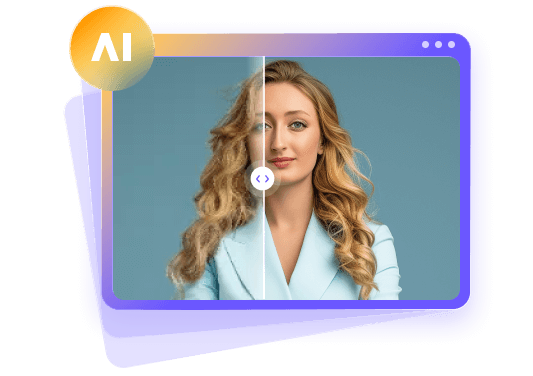
HitPaw FotorPea acts as the final stage of the workflow, taking those generated visuals and turning them into polished, ready-to-use assets.
It's particularly good at:
- Pulling out extra detail from an image using AI upscaling
- Giving a bit of extra love to textures and faces so they look even more realistic
- Sorting out the lighting and colour to make it all look just right
- Tidying up those nasty compression artefacts that can ruin a great image


Step-by-Step Workflow
Step 1: Get the image up
Use a solid MidJourney v8 prompt to generate a decent base image - and I do mean decent, not perfect, yet.
Step 2: Fire up HitPaw FotorPea
Upload your image into the software and let the magic begin.
Step 3: Give it a bit of AI love
Use the sharpening and upscaling tools to really make the image pop.
Step 4: Tweak the tone and lighting
Get in there and fine-tune shadows, highlights, and colour balance to really make it shine.
Step 5: Send it off to the world
Save the final version and get it out there - or hand it over to your client with a smile.
By following this workflow, you can be confident that your MidJourney v8 images will look the part - across all platforms.
Conclusion
Midjourney v8 - not just an upgrade to look forward to, but a whole new ball game. It's really focused on getting the realism just spot on, and precision nailed means you can depend on it to get the job done with the kind of accuracy you need.
And when it comes to choosing between Midjourney v8 vs v7, forget about which one is the best - think about what project you're tackling right now and get the right tool for the task. V7 is still just the ticket if you want to go a bit crazy with your ideas and let your creativity run wild, but for something that definitely needs precision and control, V8's the way to go.
For those of you out there who know how to combine both of these models and then fine-tune the output with a tool like HitPaw FotorPea - well, you're onto a real winner. You can build an AI workflow that's not only super efficient but also really flexible, and most importantly, actually delivers what you need.
Leave a Comment
Create your review for HitPaw articles