





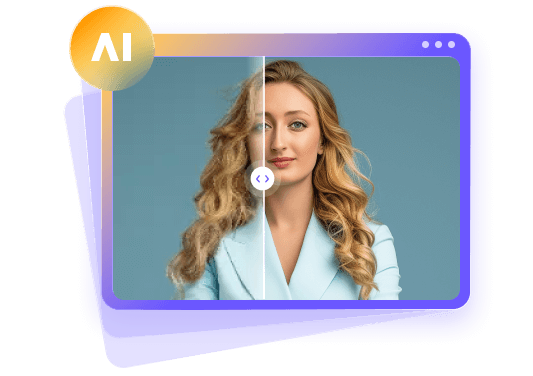
How to Make an Image Sharper in Photoshop: Easy Methods
 By Daniel Walker
Sometimes, when we take a photo, it looks perfect, but later, when we look at it closely, it turns out to be soft and blurry. If this has ever happened to you, you are not alone. This can happen to everyone and is a frustrating experience. However, you need not worry; you can recover the lost details by sharpening the photo.
But the question arises: how can you sharpen an image in Photoshop to improve clarity and fix blurry areas? Well, this guide has got you covered. In this article, we will dive deep into why images become blurry or soft and how to sharpen them in Photoshop using simple techniques.
Part 1. Why Images Become Blurry or Soft?
Before we fix the problem, we must understand why it happens. To start with, pictures don't just get blurry on their own; usually, a specific reason causes the loss of detail. By identifying the cause, you can choose the best method to fix it. Here are the most common culprits.
Camera Shake or Motion Blur
This is one of the most common reasons for a blurry photo. It happens when the camera moves while the shutter is open. Even a slight movement of your hands can make the whole picture look streaky or soft. Similarly, if your subject is moving fast, such as a running pet or a car, and your camera isn't fast enough, you get blurry photos, and this type of blur is known as motion blur.
Out-of-Focus Shots
Sometimes, the camera gets confused. For example, you want to take a picture of a person, but the camera focuses on the tree behind them instead. As a result, the main part of the picture looks soft and unclear. This is an autofocus issue, and it can be tricky to fix without the right tools.
Low-Resolution Photos
Low-resolution images lack sufficient detail. For example, if you have taken photos with old phones or downloaded them from social media, they are often low-quality because they lack enough pixels. Therefore, the image looks pixelated and soft.
Incorrect Shutter or ISO Settings
If you are taking photos in a dark room, your camera might increase the "ISO" to see better. However, high ISO creates "noise" or grain, which kills sharpness. Furthermore, if the shutter speed is too slow to let in light, any movement will blur the image.
Compression & Digital Noise
When you save a photo as a JPEG multiple times, its quality degrades each time. This is called compression. It creates weird little digital artifacts, or "blocks," in the image. These small dots and distortions make the image look rough and reduce overall clarity.
Part 2. How Sharpening Works in Photoshop
When you ask how to sharpen an image in Photoshop, this means you want to know the method behind it and what the software is actually doing. For this, you must understand that Photoshop isn't magic; it is math. It doesn't technically "create" a new detail that wasn't there. Instead, it uses a visual trick to bring back the details.
Edge Contrast Enhancement
Photoshop scans your image to find "edges." An edge is where a light color meets a dark color. To make the image look sharper, Photoshop makes the light side of the edge lighter and the dark side darker. This increase in contrast tricks our eyes into thinking the image is much crisper and more detailed.
Sharpening Filters vs. Smart Sharpen
For a long time, people used a filter called "Unsharp Mask." Despite the confusing name, it is used to sharpen photos. However, in 2025, the "Smart Sharpen" tool is superior. Smart Sharpen is more intelligent, as it analyzes the image to reduce noise in flat areas (such as the sky) while sharpening only detailed edges. This prevents your photo from looking like gritty sandpaper.
When to Use Sharpening
You should almost always apply some sharpening, but the amount depends on the subject. For example, if you are working on portraits, you need gentle sharpening. You want clear eyes, but you don't want to over-sharpen wrinkles or skin texture. Landscapes, on the other hand, can handle stronger sharpening to bring out leaves, rocks, and clouds. Whereas, if you are working with product photos, you need to apply sharpening to make the product very crisp so customers can see every detail.
Part 3. Step-by-Step Guide: How to Sharpen an Image in Photoshop

Wondering how to sharpen an image in Photoshop? Follow these steps:
Step 1: Open Your Image in Photoshop
First, launch Photoshop and open the blurry image you want to fix. Go to File > Open and select your picture.
Step 2: Zoom In to 100%
To really see what you are doing, you need to view the pixels clearly. Press Ctrl + 1 (Windows) or Cmd + 1 (Mac) to zoom your image to 100%. If you look at the picture at a zoomed-out level, you might oversharpen it without realizing it.
Step 3: Convert to Smart Object
This is a pro tip! Before applying a filter, go to the Layers panel. Right-click on your image layer and select Convert to Smart Object.
Why do this? It will allow you to change the sharpening settings later if you change your mind. It makes the editing "non-destructive".
Step 4: Open the Smart Sharpen Filter
Go to the top menu bar. Click on Filter, then hover over Sharpen, and finally select Smart Sharpen. A dialog box will pop up.
Step 5: Adjust the Settings
This is the most crucial part. Here, you will see a few sliders:
- Amount: This controls how intense the sharpening is. Start around 150% and adjust from there.
- Radius: This controls how thick the edges are. For high-resolution photos, try 1.5-2.0 pixels per inch. For smaller web images, use 0.5 to 1.0 pixels.
- Reduce Noise: If the sharpening makes the background look grainy, increase this slider slightly to smooth it out.
Step 6: Check the Preview and Save
Click the "Preview" checkbox to toggle between the before and after. If it looks crisp, click OK. Finally, save your image by going to File > Export > Export As.
Part 4. Pros and Cons of Sharpening an Image in Photoshop
 Pros
Pros
- Full control over sharpening levels
- Professional tools for detailed editing
- Works great for portraits, landscapes, and product photography
- Non-destructive edits with Smart Filters
 Cons
Cons
- Requires learning and practice
- Time-consuming for beginners
- Cannot fully fix extremely blurry images
- Needs a computer with enough power to run Photoshop smoothly
Part 5. Best AI Alternative: Sharpen Images With HitPaw FotorPea
If the steps above seemed too complicated or time-consuming, and you are looking for an easy alternative, HitPaw FotorPea has you covered. Powered by the advanced AI algorithm, this amazing software doesn't require any learning curve, and you can bring back the lost details just in seconds.
What is a HitPaw FotorPea?
HitPaw FotorPea is an AI photo enhancer that automatically sharpens blurry images, restores faces, and improves clarity with one click. Instead of doing manual adjustments like in Photoshop, the AI handles everything for you. This means you don't need to be a professional photo editor to reconstruct the details. Even a complete beginner can do it with ease, as it only takes a couple of seconds.
Some of the main features of HitPaw Photo Enhancer include:
- AI advanced algorithm
- Easy-to-use interface
- AI Auto-Sharpen Feature
- AI Face Enhancer
- AI Upscale
- Motion Blur Fix
- Multiple AI models to choose from
Step-by-Step Guide to Sharpening an Image with HitPaw FotorPea
Step 1.To get started with sharpening an image, download HitPaw FotorPea from the official website. After the download finishes, open the setup file and follow the easy installation steps on your screen.




Step 2.Once the installation is complete, launch HitPaw FotorPea on your computer. From the main dashboard, click on "Enhance Photos Now" to access the AI tools designed for sharpening an image.
Step 3.Upload the image that looks blurry or soft. Enable the "Sharpen" or "Denoise" feature to improve edges and details. This step is essential for sharpening an image without making it look unnatural.
Step 4.Click on "Preview" and allow the AI to process your image. In just a few seconds, HitPaw FotorPea automatically sharpens the image, enhances clarity, and restores fine details.
Step 5.Compare the before and after results to see the clear difference. Once you're happy with the sharpening results, click "Export" to download the high-quality, sharpened image to your device.
FAQs on Sharpen an Image in Photoshop
Yes. Photoshop can sharpen blurry images using tools like Smart Sharpen, Unsharp Mask, and High Pass Filter. These tools enhance edges and improve clarity, but the results may vary depending on the original image quality.
The best way is to sharpen images gradually and avoid overusing sharpening filters with AI tool, which can create noise and unnatural edges. For a faster workflow, AI-powered tools such as HitPaw FotorPea can automatically analyze images, enhance details, reduce blur, and improve clarity while keeping the result more natural.
Yes. While Photoshop offers professional sharpening tools, they often require manual settings and editing experience. If you want a quicker solution, HitPaw FotorPea uses AI technology to sharpen blurry photos, enhance details, and improve image quality automatically. It is especially useful for old photos, low-resolution images, and pictures with unclear details.
Conclusion
Now you know exactly how to sharpen an image in Photoshop using simple steps. Using Photoshop's powerful tools, such as Smart Sharpen, you can improve clarity and bring out details. However, the process may seem complicated and time-consuming, especially for beginners. This is where AI tools like HitPaw FotorPea come in. Powered by an advanced AI algorithm, this comprehensive photo editing tool delivers faster, easier results for clear, high-quality images.
Leave a Comment
Create your review for HitPaw articles