




How to Restore Blurry Whiteboard Photos for Better Readability
 By Daniel Walker
Taking a fast whiteboard photo during class or work saves time, but half the time the picture comes out of focus or is ruined by overhead lights. Manual transcription turns frustrating when critical notes become unreadable.
Learning how to unblur whiteboard photos allows you to restore fuzzy handwriting, boost marker contrast, and save vital information effortlessly. This guide breaks down the root causes of blurry board shots and provides step-by-step solutions using modern AI enhancers and image editors.
Part 1: Why Are Whiteboard Photos Blurry?
Before fixing an image, it helps to understand why a blurry whiteboard photo occurs in the first place.
1. Motion blur from handheld shooting
Snapping a quick picture while walking or holding a phone with one hand introduces camera shake, creating motion blur across marker lines.
2. Low-resolution phone cameras
Capturing a large whiteboard from the back of a classroom or conference room using digital zoom reduces resolution and pixelates fine handwriting.
3. Weak contrast between markers and board
Faded dry-erase markers or smudged surfaces lower optical contrast, making thin text blend into the white background.
4. Lighting issues and reflections
Overheard fluorescent lights and window glare create harsh hotspots that wash out text and cause uneven exposure.
Part 2: How to Unblur Whiteboard Photos with AI and Other Tools?
Method 1: Use HitPaw FotorPea to Unblur Whiteboard Photos (Recommended)
When dealing with severe optical blur or low contrast, specialized AI algorithms offer the fastest restoration results. Traditional sharpening tools often amplify digital noise, whereas deep-learning models intelligently reconstruct letter shapes and clean up dry-erase marker strokes.
HitPaw FotorPea is HitPaw's AI photo enhancer and AI photo generator. It features dedicated neural network models that automatically detect text structure, remove background noise, and boost stroke contrast without requiring complex manual adjustments.
Key Features of HitPaw FotorPea
Dedicated Text & Denoise Models
Specifically optimized to sharpen blurred typography, handwritten notes, and low-light document captures.
One-Click AI Enhancement
Automatically analyzes image defect types (motion blur, low resolution, or compression) and applies instant correction.
Lossless Resolution Upscaling
Upscales restored whiteboard photos up to 4K or 8K resolution for easy printing or zooming.
Batch Processing
Allows users to unblur whiteboard text across multiple meeting slides or lecture photos simultaneously.




How to Unblur Whiteboard Photos with HitPaw FotorPea?
Step 1.Import the blurry whiteboard image into FotorPea by dragging and dropping your file into the main workspace.

Step 2.Select the AI Enhance model, such as the Text Model or Denoise Model, to improve blurry areas and recover details.
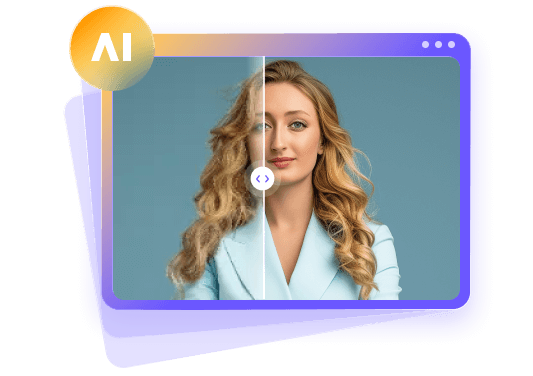
Step 3.Preview the enhanced result, check stroke clarity with the side-by-side viewer, and export the clearer whiteboard photo.
Method 2: Use Adobe Photoshop to Sharpen Whiteboard Photos
Adobe Photoshop is professional image-editing software that provides manual control over sharpening, curves, and contrast. While it lacks automated single-click document restoration, using Unsharp Mask alongside Levels adjustments can isolate marker strokes and eliminate surface background grayness.
- Step 1.Launch Photoshop, open your blurry whiteboard picture, right-click the layer, and select Convert to Smart Object.
- Step 2.Go to Filter > Sharpen > Unsharp Mask. Set the amount between 100%-150%, the radius to 1.5-2.0 pixels, and the threshold to 0 to sharpen faded marker edges.
- Step 3.Press Ctrl + L (Windows) or Cmd + L (Mac) to open Levels. Drag the left black slider inward to darken the handwriting and the right white slider inward to brighten the whiteboard surface. Export the final image as a JPEG or PNG once the handwriting is legible.
Method 3: Use Canva AI Photo Enhancer to Improve Whiteboard Images
Canva provides an accessible browser-based platform equipped with an integrated AI photo editor. It is ideal for users looking to enhance whiteboard photo online without installing heavy desktop software.
- Step 1.Create a new design in Canva and upload your blurry whiteboard picture. Access Photo Editing Tools: Click on the image and select Edit Photo from the top toolbar.
- Step 2.Under the Adjust panel, increase the Clarity and Sharpness sliders. Alternatively, select Canva's Magic Enhance tool to let AI automatically clear up soft text edges.
- Step 3.Click Share > Download to save your polished image.
Part 3: How to Choose the Best Way to Unblur Whiteboard Photos?
Selecting the right tool depends on your technical expertise, available time, and the severity of the blur. While manual photo editors require fine-tuning exposure levels, AI-driven solutions automate edge detection to restore unreadable handwriting in seconds.
Each method fits a different need. Use this quick comparison to match the right tool to your situation:
| Method | Best For | Pros | Cons | Quality | Speed |
|---|---|---|---|---|---|
| HitPaw FotorPea | Fast, no-skill AI fixes | One click, upscales resolution, batch mode | Needs internet/app | High | Fast |
| Adobe Photoshop | Advanced manual control | Full control, precise results | Steep learning curve | High | Slow |
| Canva AI Enhancer | Quick browser edits | Easy interface, free tier | Fewer whiteboard-specific tools | Medium | Medium |
If you want the best balance of quality and speed, AI-based tools are the simplest way to unblur whiteboard photos without any technical skill. Save Photoshop for cases where you need pixel-level control, and use Canva when you're already editing inside its design workspace.
Part 4: FAQs About Unblurring Whiteboard Photos
Yes, modern AI photo enhancers use deep-learning models trained on text structures to recognize distorted marker lines. Rather than simply increasing pixel contrast, AI reconstructs blurred letter shapes, making illegible notes readable.
To sharpen text, increase local contrast between the markers and the white board surface. In dedicated tools like HitPaw FotorPea, selecting a Text or Denoise model automatically sharpens stroke edges. In manual editors like Photoshop, using Unsharp Mask combined with Levels contrast adjustments darkens the ink while whitening the background.
AI tools equipped with glare-reduction algorithms can analyze uneven light distribution and reduce hotspot highlights. By balancing background luminance and dark marker values, AI neutralizes reflections that mask underlying text.
For most users, HitPaw FotorPea is the best option because its automated AI algorithms eliminate the need for manual curve adjustments. For advanced users who already own design software, Adobe Photoshop offers extensive manual sharpening filters.
Final Verdict
Unreadable whiteboard photos do not have to result in lost meeting notes or missed lecture details. While traditional tools like Photoshop allow for precise manual contrast tuning, AI-powered software simplifies the process significantly. HitPaw FotorPea stands out as the most efficient choice, leveraging specialized AI models to unblur whiteboard text and restore clarity in a single click.
Leave a Comment
Create your review for HitPaw articles