



How to Increase Image Resolution Without Losing Quality
 By Daniel Walker
Enlarging a small image sounds simple: increase its width and height, then save it. In practice, that process often reveals blocky pixels, soft edges, and compression artifacts. The problem is not the new dimensions themselves. A low-resolution file contains limited visual information, so ordinary resizing must stretch or estimate what is already there.
The best method depends on the source and how you plan to use it. A modest resize may be enough for a web graphic, while a cropped portrait or old scan usually needs AI-powered reconstruction. This guide explains what happens during enlargement, compares the main upscaling methods, and shows how to improve resolution of image with HitPaw FotorPea while keeping the result clear and natural.

Can You Increase Image Resolution Without Losing Quality?
Yes, you can enlarge an image while preserving much of its visible quality, especially when the original is reasonably clear and the increase is moderate. However, simply adding more pixels cannot recover exact details that were never captured. Traditional interpolation estimates new pixels from neighboring colors, so a large enlargement may still look blurry or pixelated.
AI super resolution takes a more advanced approach. It analyzes patterns such as edges, textures, faces, and text, then reconstructs plausible detail as it creates a larger image. The result can look significantly clearer than a standard resize, although no tool can guarantee a perfect restoration of severely missing information.
What Happens When You Increase Image Resolution?
Resolution usually refers to the number of pixels in an image. A file that measures 800 × 600 pixels contains 480,000 pixels; doubling both dimensions to 1600 × 1200 creates four times as many. A basic resize fills those extra positions by estimating colors from nearby pixels. This can smooth jagged edges, but it does not automatically add authentic texture. The farther you enlarge the file, the more obvious softness, halos, or square pixels may become.
What Is Super Resolution?
Super resolution is a technique for producing a higher-resolution image from a lower-resolution source. Conventional algorithms use mathematical interpolation. AI-based super resolution uses models trained to recognize visual patterns and predict how fine details may look at a larger scale. Instead of only stretching existing information, it can refine outlines, reduce noise, and rebuild texture.
What Is the Best Way to Increase Image Resolution?
The best option is the least aggressive method that meets your target size. Start with the cleanest original available, keep the aspect ratio locked, and avoid enlarging more than necessary. Then choose a method based on the amount of improvement the image needs.
Traditional Image Resizing
Traditional resizing changes the pixel dimensions through interpolation methods such as nearest neighbor, bilinear, or bicubic sampling. It is fast and suitable for small adjustments, layout mockups, or images that are already sharp. It can also preserve the exact appearance of pixel art when the right setting is used. For a major enlargement, however, resizing alone usually makes edges softer because it cannot invent meaningful detail.
Online Image Upscaling
An online upscaler is convenient when you need a quick result without installing software. You upload a picture, select a scale or target size, and download the enlarged version in a browser. Some services use traditional interpolation, while others use AI, so "online" describes how the tool is accessed rather than how it enhances the file. Before uploading private portraits, client assets, or confidential documents, check the service's file-retention and privacy terms.
AI Super Resolution
AI super resolution is generally the strongest choice for a small photo that must become substantially larger. It can improve perceived detail while addressing blur, noise, or compression artifacts at the same time. Results still depend on the source: a clear 1000-pixel image gives the model more useful information than a heavily compressed thumbnail. Use the preview at 100% zoom and compare natural textures before exporting.
How to Increase Image Resolution with FotorPea
HitPaw FotorPea is a AI photo enhancer for users who want to upscale an image and improve its overall clarity in one workflow. Its AI Upscale Model offers preset 1X, 2X, 4X, and 8X scales, along with custom width and height controls. Processing choices include Generative, Soft, and High Fidelity modes, while additional models can target faces, noise, blur, faded color, or text-heavy images.
Key features
- AI-assisted upscaling with preset and custom dimensions
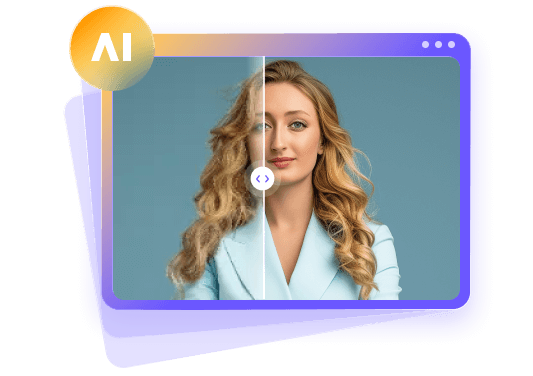
- Preview for comparing the original and enhanced result before saving
- Dedicated models for face restoration, denoising, sharpening, color, and text
- Support for common formats, including JPG, JPEG, PNG, WEBP, and TIFF
- Batch enhancement for processing multiple images more efficiently
 Pros
Pros
- Combines enlargement and quality enhancement in one interface
- Offers model choices for different image types instead of a single generic filter
- Keeps the aspect ratio stable when a scale multiplier is used
- Lets users inspect the result before export
 Cons
Cons
- AI-generated details may not perfectly match information missing from the original
- Large images and advanced models can require more processing time and capable hardware
- The free version allows testing and previewing, but exporting enhanced files requires a paid version
Step-by-Step Guide to Increase Image Resolution
Step 1: Install and open HitPaw FotorPea
Download the current installer from the official HitPaw FotorPea website, complete the setup, and launch the program. From the home screen, open AI Enhancer.




Step 2: Import the original image
Choose the Upscale Model and add the image you want to enlarge. You can select a file or drag and drop it into the workspace.
Step 3: Select the scale and processing mode
Open the Upscale Model settings, then choose 2X, 4X, 8X, or enter custom dimensions.
Step 4: Preview and export
Click Preview and examine important areas at full size. Check eyes, hair, lettering, straight edges, and repeated textures for an overly smooth or artificial appearance.
How to Improve Image Resolution for Different Types of Images
Different subjects contain different kinds of detail. Choosing the right enhancement approach helps avoid a one-filter-fits-all result.
Low-Resolution Photos
Begin with light noise reduction if the photo contains visible grain or JPEG blocks, then upscale it once to the required dimensions. A 2X enlargement is a sensible first test. Move to 4X or 8X only when the intended print or display size requires it, and judge the result at 100% zoom rather than relying on a small preview.
Portraits and Face Photos
Faces are sensitive to artificial-looking edits. Use a portrait or face-restoration model that preserves eye shape, skin texture, hairlines, and expression. Avoid combining an aggressive upscale with heavy smoothing, as this can produce waxy skin or invented features. Compare the enhanced face with the original before accepting the result.
Old and Blurry Photos
Old scans often combine low resolution with dust, scratches, fading, blur, and noise. Upscaling alone magnifies those defects. Start from a high-quality scan, then use restoration, denoising, or sharpening alongside enlargement. Keep an untouched copy because a subtle restoration usually looks more authentic than an overly clean one.
Images with Text
Screenshots, posters, menus, and scanned documents need crisp letterforms and straight edges. Use a text-focused enhancement mode when available, keep the original aspect ratio, and avoid excessive sharpening that creates bright halos around characters. After upscaling, verify every small letter and number manually; AI can make unclear text look sharper without making it factually accurate.
Common Mistakes When Increasing Image Resolution
- 1. Enlarging too much in one attempt.
- 2. Starting with a poor copy.
- 3. Resizing the same image repeatedly.
- 4. Applying too much sharpening.
- 5. Expecting perfect recovery.
A dramatic scale can force the software to invent more information than the source supports. Test 2X first and increase only if necessary.
A compressed screenshot, messaging-app download, or repeatedly saved JPEG contains fewer useful details than the original file. Locate the cleanest source before editing.
Multiple enlargement and compression cycles compound softness and artifacts. Return to the original and create each required output size from that master file.
Strong sharpening can create halos, gritty skin, and unnatural outlines. View the image at 100% and reduce the effect if edges begin to glow or textures look crunchy.
AI can generate a convincing interpretation of missing detail, but it cannot verify exactly what an unreadable sign, distant face, or blurred texture originally contained. Treat reconstructed information cautiously.
FAQs About Increasing Image Resolution
You can preserve quality during a moderate enlargement, and AI super resolution can improve perceived clarity. However, no method can perfectly recover every detail absent from the source. Start with the best original, enlarge only as much as needed, and inspect the preview closely.
If you want to increase resolution of image free, free image editors can resize pixel dimensions, and many AI tools offer limited trials or previews. Check whether the free option adds a watermark, limits resolution, stores uploads, or restricts exporting before choosing it.
Use a reputable browser-based upscaler, upload a non-sensitive image, select the desired scale, and compare the downloaded file with the original. Review privacy and retention policies first, especially for personal photos or business assets.
Super resolution creates a larger, higher-resolution image from a smaller source. AI-based systems analyze visual patterns and generate plausible edges and textures, which can produce a clearer result than ordinary interpolation.
Use AI upscaling together with the correction that matches the problem. Apply denoising for grain, a sharpen or blur-repair model for soft edges, face restoration for portraits, or text enhancement for screenshots. Severe motion blur or missed focus may still require a better original.
Conclusion
Increasing image resolution is not just a matter of typing larger dimensions. Traditional resizing is useful for small changes, online tools add convenience, and AI super resolution offers the best chance of making a significantly enlarged image look clearer. The most reliable workflow starts with the cleanest source, uses a sensible scale, and checks the result for natural texture.
HitPaw FotorPea brings upscaling, previewing, and targeted enhancement models into one desktop workflow. Whether you are preparing a portrait, an old scan, a product photo, or a text-heavy image, select the model that matches the content and export only after the enlarged version remains faithful to the original.
Leave a Comment
Create your review for HitPaw articles