




Is Nano Banana 2.1 Worth Trying? A Hands-On Review
 By Daniel Walker
Nano Banana 2.1 is Google's latest high-efficiency AI image model designed to bridge the gap between creative text-to-image versatility and precision conversational editing. Built on advanced multimodal architecture, this release introduces major upgrades in text rendering clarity, multi-image reference fusion, and cost efficiency.
In this hands-on review, we test actual model outputs across diverse practical scenarios, evaluate its day-to-day pros and cons, and compare its performance directly against rival image generation tools.
Part 1: What Is Nano Banana 2.1?
Overview and Release Information
Nano Banana is Google's name for the image abilities inside its Gemini models. Google describes version 2.1 as an update to Nano Banana 2 (Gemini 3.1 Flash Image). Its API model ID is gemini-nano-banana-2.1, and Google Cloud lists a release date of October 6, 2026. Google is rolling it out to the Gemini app, AI Mode in Search, Google Ads, AI Studio, Flow and Stitch.

Key Features and What's New
1. High-Resolution 4K Rendering
Generates crisp visuals up to 4K resolution with refined structural details and textures.
2. Web Search Grounding
Integrates live Google Search data to pull real-time context for accurate infographics and historical depictions.
3. Configurable Thinking Levels
Allows users to adjust internal reasoning steps from minimal to high, improving factuality in complex layouts.
Supported Image Generation and Editing Workflows
The model supports text-to-image synthesis, panoramic layouts spanning extreme aspect ratios (such as 4:1), and multi-image reference fusion (accepting up to 14 reference files). Users can execute conversational edits by chatting directly with the interface to modify specific regions without completely scrambling the original composition.
Part 2: Nano Banana 2.1 Hands-On Tests
We tested the model using actual outputs and practical scenarios:
1. Realistic Portrait Generation
"A close-up studio portrait of a middle-aged artisan working in a dimly lit pottery studio, natural side-window soft lighting, shallow depth of field, 4K resolution".
Evaluation
The model captured skin textures, stray hairs, and subtle clay dust accurately. Prompt adherence was exceptional, though minimal thinking mode required a second prompt to fix a slight asymmetry in the background shelving.
2. AI Image Editing with Reference Images
[Reference Image of a plain blue ceramic mug] "Change the color of the mug to a matte forest green and place it on a rustic wooden coffee table next to a steaming ceramic cup".
Evaluation
Superior scene preservation. The geometry and specular highlights of the original mug were perfectly maintained while seamlessly shifting the color and background context.
3. Text Rendering in Posters or Product Graphics
"A vibrant vintage travel poster for Kyoto featuring a stylized red torii gate, with crisp, bold typography reading 'KYOTO SPRING' across the top".
Evaluation
Outstanding text clarity. Lettering came out clean without the gibberish artifacts common in older diffusion models.
4. Wide-Banner or Panoramic Image Generation
"A panoramic watercolor landscape of the Swiss Alps at golden hour, wide 4:1 aspect ratio".
Evaluation
Successfully eliminated the recurring tiling and seam artifacts that previously plagued extreme aspect ratios at high resolutions.
5. Character Consistency Across Multiple Images
"Generate a series of three shots featuring a smiling female barista in a green apron serving coffee in a sunlit café".
Evaluation
Maintained facial features, hair structure, and apron style across multiple generated frames with high fidelity.
Part 3: Nano Banana 2.1 Pros and Cons
Strengths Demonstrated in Testing
- Exceptional text legibility for infographics, posters, and product labels.
- Highly reliable multi-image reference blending for product photography catalogs.
- Fluid conversational editing that leaves unselected areas untouched.
Common Errors or Limitations
- Generating complex data-heavy infographics occasionally requires setting the thinking level to "high," which increases processing time.
- Extremely niche historical costumes may require web search grounding enabled to avoid minor wardrobe inaccuracies.
Tasks That May Still Require Manual Editing
While Nano Banana 2.1 excels at overall composition and texture, fine micro-retouching-such as polishing individual eyelash strands or smoothing minor background artifacts in extreme close-ups-still benefits from secondary enhancement tools.
Part 4: Nano Banana 2.1 vs. Nano Banana Pro vs. GPT Image 2.5
We evaluated these models using identical prompts across standard testing environments.
Feature / Metric Nano Banana 2.1 Nano Banana Pro GPT Image 2.5
| Feature / Metric | Nano Banana 2.1 | Nano Banana Pro | GPT Image 2.5 |
|---|---|---|---|
| Image Quality & Detail | Sharp up to 4K; optimized for speed & efficiency | Ultra-fine cinematic rendering and depth | High realism, vibrant default color grading |
| Prompt Adherence | Excellent via configurable reasoning | Exceptional structural compliance | Very high semantic alignment |
| Text Rendering | Crisp, multi-language support | Clean typography and label creation | Good, occasional spelling quirks |
| Reference Editing & Consistency | Up to 14 references; strong multi-shot continuity | Advanced holistic style mapping | Solid multi-turn image generation |
| Best Use Cases | Social content, product catalogs, fast layouts | High-end cinematic concept art | Artistic illustrations and creative concepts |
Part 5: How to Improve Nano Banana 2.1 Images After Generation
Even with the impressive 4K output capabilities of Nano Banana 2.1, generated assets occasionally require minor touch-ups in fine facial details, overall resolution scaling, or texture sharpness before they are ready for commercial deployment.
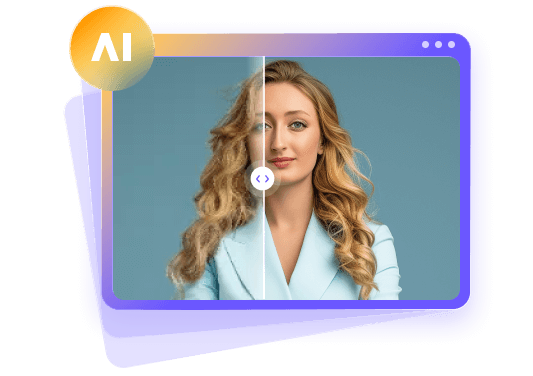
HitPaw FotorPea is HitPaw's AI photo enhancer and AI photo generator. It provides specialized AI models designed to upscale resolution, clear up subtle pixelation, and restore crisp edge details in seconds.



How to Improve Nano Banana 2.1 Images with HitPaw FotorPea
Step 1.Import your generated Nano Banana 2.1 image into the HitPaw FotorPea workspace.
Step 2.Select the appropriate AI model such as the Face Model for portraits or General Model for landscapes and adjust the slider settings.
Step 3.Preview the real-time before-and-after comparison, click export, and save your fully enhanced high-definition graphic.
Part 6: FAQs About Nano Banana 2.1
Nano Banana 2.1 is Google's advanced, high-efficiency AI image model designed for rapid text-to-image generation, precise text rendering, and conversational photo editing.
Access tiers vary depending on the platform hosting the model, with developer APIs offering cost-efficient per-image generation structures alongside various free community playground trials.
You can access Nano Banana 2.1 through supported developer platforms, Google AI Studio, and integrated creative toolkits that feature the model in their model selection menus.
Nano Banana 2.1 prioritizes high-speed execution, configurable thinking levels, and expansive multi-image reference blending, whereas Nano Banana Pro focuses on deep cinematic art rendering.
Yes. While the model produces clean 4K visuals natively, external tools like HitPaw FotorPea can be used to further upscale textures and refine fine details.
Final Verdict
Nano Banana 2.1 successfully sets a new benchmark for speed, text clarity, and multi-image consistency. Whether you are managing social media content calendars or building out an e-commerce product catalog, its ability to follow complex prompts and render clean typography makes it an indispensable asset. For creators looking to push output quality even further, pairing the model with a dedicated upscaler like HitPaw FotorPea delivers production-ready results every time.
Leave a Comment
Create your review for HitPaw articles


