



Nano Banana 2 Lite Review: Is It the Best Fast AI Image Model?
 By Daniel Walker
All kinds of creators require many revisions of ads, product pages, social posts, and even design ideas. Google's Gemini image model, Nano Banana 2 Lite, focuses on 1K generation and edits with rapid turnaround at a lower cost. It's not meant to supersede other high-end models but can handle a lot of the daily visual tasks. This review focuses on its image quality, speed, limitations, pricing, workflow, and competition to best evaluate if it's what you need.

Part 1: What Is Nano Banana 2 Lite?
Nano Banana 2 Lite is the public name for Gemini 3.1 Flash-Lite Image. Its API model ID is gemini-3.1-flash-lite-image. Google claims it is the fastest and most cost-effective model in the Nano Banana family.
The model is capable of text-to-image generation, image editing, and making multiple edits and offers support for various common aspect ratios at 1K. It is also equipped with SynthID and C2PA content marking.
Position in Nano Banana Family
| Model | Best For |
|---|---|
| Nano Banana 2 Lite | Fast drafts, bulk generation, and simple edits |
| Nano Banana 2 | Better detail, stronger editing, and balanced work |
| Nano Banana Pro | Complex prompts and professional 4K assets |
| Original Nano Banana | Older workflows that need an upgrade |
Google positions Nano Banana 2 Lite as the successor to the original Gemini 2.5 Flash Image. Nano Banana 2 serves as the general-purpose model. In contrast, Nano Banana Pro is tailored towards more complex tasks and precision requirements.
Main Features of Nano Banana 2 Lite
- Generate images quickly and create 1K visuals in about four seconds.
- Reduce generation costs by producing standard 1K images affordably.
- Edit images easily by changing backgrounds, objects, colors, and details.
- Maintain subject consistency across different images and editing requests.
- Render short text clearly for signs, labels, and advertisements.
- Support multiple formats including square, portrait, landscape, and widescreen.
- Handle large workloads through batch processing and high-volume generation.
- Create visual variations for testing, comparison, and creative selection.
Common Use of Nano Banana 2 Lite
This AI image generator is used for generating scenario and storyboard images, graphics for blogs and ads, app previews, room design ideas, and concept art drafts for product design.
It is especially helpful when you need to quickly generate many ideas, variants, or visual options to compare and choose the best for continued editing.
Its core limitations include 1K-only resolution output, no Google Search grounding, and less reasoning compared to larger models of Gemini images.
Part 2: Nano Banana 2 Lite Review: Performance Test
This Nano Banana 2 Lite review includes an analysis of Google's official examples, model specs, analysis of pricing, and review of public performance data to determine overall capability, speed, cost metrics, and real-world use cases.
1. Image Quality Review
Nano Banana 2 Lite offers clearly useful images for everyday creative tasks. Its quality in our real-world tests varied by prompt specifics, scene complexity, type of subjects, and the extent of editing needed.
Portrait Generation
Nano Banana 2 Lite can generate clear portraits with consistent character features and natural lighting. This is useful for profile pictures, social media posts, and visual storyboarding. This model has great character consistency, but with a 1K output, details such as hair, skin, and clothing may become less clear in larger outputs.
Product Images
This model works well for product imaging with lifestyle backgrounds, simple studio settings, and product variations. It can also help draft initial ads by maintaining object consistency and generating short texts. However, it's still very important to review it for any logos, labels, reflections, and any product-defining features before considering the image for commercial use.
Complex scenes
While Nano Banana 2 Lite is capable of creating location-based mockups, rough diagrams, and other scenes with multiple subjects, it often has issues with missing or improperly arranged elements and with spacing in highly crowded scenes. This can usually be resolved with better results by breaking the complex prompts into smaller simpler edits.
2. Speed Review
Based on Google's published benchmark testing, Nano Banana 2 Lite generates a 1K text-to-image output in about four seconds. Comparatively, in similar launch tests, Nano Banana 2 takes about 20 seconds. Google's developer documentation has stated that Lite is optimized for very low response times in supported workflows.
However, the actual response time for generation can be heavily affected by the traffic on the supported platforms, the length of the prompt, the images provided as input, and the complexity of the edits. Image editing may also take slightly longer than creating a fresh image.
Best for: Rapid generation of design ideas, app previews, bulk visuals for ads, ad testing, and repeated image drafts.
Useful Tips
- Write clear prompts with the subject, setting, lighting, and style.
- Keep each prompt focused on one main visual idea.
- Generate several versions before choosing the best image.
- Request one edit at a time for better control.
- Check faces, hands, text, logos, and small details carefully.
- Use simple backgrounds when creating product or portrait images.
- Enhance the final image when higher resolution is required.
Simple Steps of How to Use Nano Banana 2 Lite
Step 1.Open Google AI Studio and click Get Started.
Step 2.Click the Playground option to start generating images with Nano Banana 2 Lite.
Step 3.From the right sidebar, select Nano Banana 2 Lite and adjust the output format, temperature, aspect ratio, and resolution.
Step 4.Enter a prompt describing the image you want to generate, then click the Run button.
Step 5.The model may take about four seconds to process your prompt and generate an image based on your instructions.
Part 3: Nano Banana 2 Lite vs Nano Banana 2 vs GPT Image 2 vs Midjourney
Each of these image models has a different focus. Nano Banana 2 Lite is speedy and economical. Nano Banana 2 is focused on stronger details and resolution. For prompt precision and ease of post-processing, GPT Image 2 works best, and Midjourney is more concerned with the style, flair, and artistic nature of the images it creates.
The latest version of Midjourney is V8.1, which is different from Midjourney Image 2. From June 2026, V8.1 became the standard version of Midjourney, and compared to previous versions, it has improved prompt comprehension, detail regulation, and the speed of image generation.
| Tool | Speed | Image Quality | Pricing | Best Use |
|---|---|---|---|---|
| Nano Banana 2 Lite | About 4 seconds | Good, 1K only | About $0.034 per image | Bulk drafts |
| Nano Banana 2 | About 20 seconds in launch tests | High, up to 4K | About $0.067 at 1K | Balanced production |
| GPT Image 2 | Medium | Very high | Usage-based | Complex layouts and editing |
| Midjourney V8.1 | Fast standard jobs | High and artistic | From $10 monthly | Art and concept visuals |
Which One Should You Choose?
Choose Nano Banana 2 Lite If: You want to keep costs low when generating drafts, need faster generation, want 1K output, want to produce images in bulk, and want faster in-app generation of images.
Choose Nano Banana 2 If: You want a higher resolution, enhanced editing, higher detail, prompt richness, and a balance of professional end results.
Choose GPT Image 2 If: You want to generate detailed layouts, flexible sizes, complex edits, and perform careful images processing.
Choose Midjourney V8.1 If: You want to generate highly detailed and textural images of concept art, illustrations, and visual representations of fashion and styling.
Part 5: Create and Enhance Nano Banana 2 Lite Images with a Complete AI Workflow
Although Nano Banana 2 Lite is a great tool for generating fast drafts, visual ideas, product scenes, and social media images, it is important to note that many outputs require post-processing to achieve sharpness, resolution, clean facial features, and detail suitable for professional use.
A complete workflow can combine rapid image generation with a subsequent enhancement tool. For this purpose, NanoBanana 2 Lite can handle the creative stage, and HitPaw FotorPea allows you to conveniently enhance them for larger displays, websites, marketing materials, and personal use.
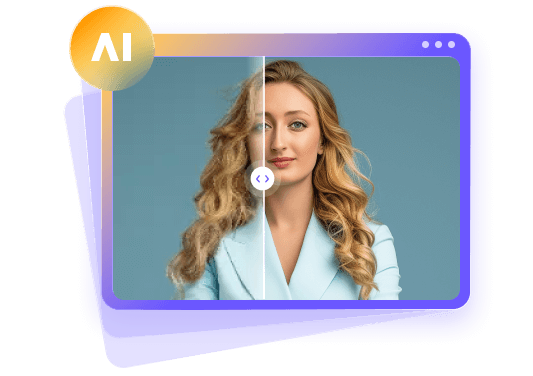
HitPaw FotorPea is an AI-powered image editing and enhancement tool for Windows and Mac. It can sharpen AI-generated images, reduce blur and noise, repair facial details, improve colors, and increase image resolution.
It also supports AI image generation, old photo restoration, batch processing, and several advanced enhancement models. Its user-friendly interface allows beginners to improve images without complex editing skills, making it a practical next step after generating visuals with Nano Banana 2 Lite.
Key Features of HitPaw FotorPea
- Enhance images to 4K/8K while improving sharpness and details.
- Offers all in one workflow for generating and editing images.
- Create visuals with AI image generation from prompts or references.
- Restore old photos by repairing scratches, fading, blur, and damage.
- Use a user-friendly interface without needing advanced editing experience.
- Access advanced model support for faces, text, noise, and details.
- Process multiple images together through fast and simple batch enhancement.
- Preview improved results before saving and exporting the final image.
Steps To Use HitPaw FotorPea
Step 1.Download and install HitPaw FotorPea on your computer.


Step 2.Open HitPaw FotorPea and select Enhance Photos Now from the main dashboard to improve your Nano Banana 2 Lite image.
Step 3.Upload the Nano Banana 2 Lite generated image, then choose the AI model that best matches its type and enhancement needs.
Step 4.Preview the enhanced Nano Banana 2 Lite image and compare the details carefully before saving it.
Step 5.Export the enhanced photo once you are satisfied with the final result.
FAQs on Nano Banana 2 Lite
Nano Banana 2 Lite is Google's Gemini 3.1 Flash-Lite Image model. It is designed for fast, low-cost 1K image generation and simple image editing tasks.
Yes. Google released it on June 30, 2026, through Google AI Studio, the Gemini API, and Gemini Enterprise Agent Platform. It is also being added to several Google consumer products.
Yes. Google's launch comparison showed that Nano Banana 2 may take about 20 seconds, while Nano Banana 2 Lite may create an image in about four seconds. Actual speed can change depending on traffic, settings, and prompt complexity.
It is best for fast drafts, blog graphics, ad versions, product concepts, storyboards, app previews, social content, and high-volume 1K image generation.
Nano Banana 2 Lite is better for fast generation, low API cost, bulk production, and simple editing. Midjourney V8.1 is generally better for artistic styling, creative mood, and polished visual concepts.
Conclusion
Nano Banana 2 Lite is a useful option for creators and developers who need fast, low-cost image generation. It performs well for portraits, product scenes, mockups, blog graphics, and social media visuals at 1K resolution. However, it may not provide enough detail for large displays or professional projects.
For a more complete workflow, HitPaw FotorPea is a recommended choice. It can sharpen Nano Banana 2 Lite images, remove noise, repair facial details, and enhance image quality to 4K or 8K. Using both tools allows users to generate ideas quickly and then prepare cleaner, sharper images for final use.
Leave a Comment
Create your review for HitPaw articles


