





Understanding Camera Parts and How They Impact Your Photos
 By Daniel Walker
The first step to taking a great photo is learning how a camera works. No matter if you have a DSLR, a mirrorless camera, or even just a smartphone, understanding what's happening inside the camera can help you to take much better pictures. A lot of beginners are often a little lost with terms, but once you get through the camera parts diagram and their fundamentals, photography is so much easier and fun.
This guide will be focused on the most important camera parts, what their respective functions are, and how they each work to form a picture. You will also understand how pictures can be improved with modern-day AI tools, even with no camera skills and limited equipment.
Part 1: Essential Parts of a Camera and Their Functions
To be able to grasp how photos are taken, beginners should understand the most important parts of a camera and how they enable the various functions. As such, below is a list of the core components of a camera and their roles in the camera's myriad functions.
1. Camera Body
The camera body is the assembly that keeps all of the inner and outer components together. This assembly has all the buttons, dials, and ports and has a mounting area for a lens. The camera body is meant to allow an operator to interact with the camera while also keeping sensitive inner parts safe from dust and other damaging forces.

2. Lens
The lens of a camera is its most essential optical part. It determines the sharpness of the image, the depth of focus, the perspective of the shot, and most importantly, how light enters the camera. While a wide-angle lens can capture a larger scene, a telephoto lens will enable you to capture far away subjects as if they were close to you. The variety of lenses available will change a photograph very distinctly, even when using the same camera body.
3. Image Sensor
The image sensor is located in the camera body and captures the light that comes through the lens. It changes the light into a digital representation of the photo. Generally, larger sensors will produce a better-quality image and will also improve the image quality in low-light situations. The image sensor is also a major player in color accuracy, detail, and sharpness of the photo.
4. Shutter
The shutter is like a curtain; it can be either mechanical or electronic and it opens and closes to either allow or limit the amount of light that hits the sensor. A fast shutter speed will freeze a moment in time, while a slow shutter speed creates motion blur. Shutter speed control is especially important in action shots and shots taken in the dark and in many creative uses.
5. Aperture
The camera lens has a little opening that can get bigger or smaller. This helps to control how much light comes into the camera. When light comes into the camera through a bigger opening, a blurrier background picture is captured. When it is smaller, everything is more focused. Aperture affects the brightness and focus of your picture greatly.
6. Viewfinder & LCD Screen
The viewfinder allows the user to look through the camera and see how a photo will appear while the LCD screen helps a user observe what is in front of the camera, also helps users to see already captured photos. The majority of newer camera models include an electronic viewfinder, which provides you with a preview of what the lighting will look like and how your image could take shape. They both assist with composition and focus before the image is captured.
7. ISO Setting
The ISO determines how sensitive the image sensor will be to light. A low ISO will give you clean images and is best used in bright environments, a high ISO is best if you are in a dark environment, however it will introduce noise. To get a proper exposure, the ISO should be balanced with shutter speed and aperture.
Part 2: How HitPaw FotorPea Enhances Photos Like a Professional Camera
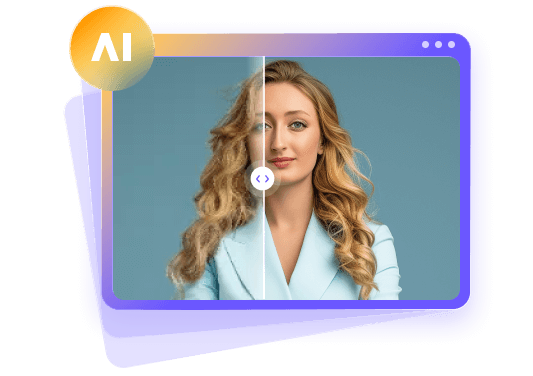
Not everyone has a good understanding of the parts in a camera and the knowledge to take advanced professional photos. This is where AI tools come in. HitPaw FotorPea is considered a studio-grade AI photo enhancer. It increases the clarity, sharpness, and detail of photos and requires no tedious editing skills.
Photos taken with both smartphones and cameras can be improved with HitPaw FotorPea. It can unblur motion, restore intricate textures, reduce noise, and upscale resolution. Additionally, even photos that are considered damaged can be repaired. With only a click, photos can be improved to camera-quality results, making it great for beginners, creators, and professionals.
Key features: Make HitPaw FotorPea Different
- Studio-grade AI enhancement improves texture, detail, and clarity
- Motion blur repair allows users to adjust focus based on motion shakes and fast movementswithout camera
- The face restoration model sharpens detail on the face, with no artifacts
- Noise and grain reduction keep the low-light photos clear and preserve details
- Up to 8K upscaling optimizes low-res images for print-ready quality
- Several AI models target certain issues with photos
- One-click enhancement allows lots of easy adjustments and doesn't require any editing
- Natural-looking results that avoid overprocessing and looking too artificial




How to Enhance Photos Using HitPaw FotorPea
Step 1.Open HitPaw FotorPea and select Enhance Photos Now.
Step 2.Either drag and drop an image or click the + button to upload a photo.
Step 3.Select the AI model based on the type of photo. Select face restoration, AI upscale, AI color and enhancement with denoise, sharpen, text, animation and scratch repair.
Step 4.Click on the preview to see the enhanced image and export the edited image if you are satisfied.
Part 3: Comparison of Camera Hardware VS AI Enhancement Tool
Knowing when to depend on camera hardware and when it's sufficient leaves AI to handle the rest helps you pick the right method.
1. When You Need a Real Camera
Considerable control regarding lighting, lenses, and exposure is required for professional photography in commercial shoots, sports photography, wildlife photography, and very bright or very dark conditions. For paid client work, a good high-end camera that gives the same results is preferable.
2. When AI Is Enough (or Even Better)
For social media posts, it's better to use AI enhancement. You can use AI to clear up and sharpen e-commerce product photos. No need to reshoot if images are old and damaged or blurred; these can be restored. AI tools can also upgrade low-res images to high-res images quickly with one click.
3. Quick Comparison Table
| Feature | Camera Hardware | AI Enhancement Tool |
|---|---|---|
| Cost | High upfront investment | Low or flexible pricing |
| Skill Required | Photography knowledge | Beginner-friendly |
| Editing Time | Manual adjustments | One-click results |
| Hardware Needed | Camera, lenses, gear | Computer or phone |
The best results often come from using both techniques. An image can be taken from a camera and enhanced by an AI tool. This combination will save the user a lot of time and will guarantee a good image quality.
FAQs of Parts of Camera
The basic parts of a camera include body, lens, image sensors, shutter, aperture, viewfinder, LCD, and ISO controls, all of which work together to take pictures.
Cameras take pictures by allowing light to come through the lens, controlling the exposure using the shutter and aperture, and capturing the light data with the image sensor.
AI tools like HitPaw FotorPea can automatically enhance photos and simulate camera-quality results without technical knowledge.
Conclusion
Knowing how camera parts function enables you to take better images and make better decisions regarding equipment. Each camera part affects the exposure, clarity, and image quality. While traditional cameras are a must-have for professionals, the combination of AI tools and traditional cameras is a game-changer.
HitPaw FotorPea provides an easy option to enhance images, bring back missing elements, and gain clarity similar to that of cameras, all without having to do complicated edits. Integrating AI improvements with a camera allows a robust and adaptable photography process.
Leave a Comment
Create your review for HitPaw articles


