





The Ultimate Guide to High-Quality Poster Prints (2026 Edition)
 By Daniel Walker
High-quality poster prints can instantly transform your room, office, or project. Not only do they make your photos look sharper, but also your design more professional and your walls more beautiful. Poorly printed images, on the other hand, can look dull, blurry, or washed out. So whether it's a cherished family photo, a breathtaking landscape, or a piece of digital art, the final impact depends entirely on the print quality.
In this article, we will dive deep into everything you need to know about high-quality poster prints, from what makes a poster high-quality to different types of print and the exact steps you need to prepare your image files. In addition, you will learn how to enhance even old or low-resolution photos using a powerful tool like HitPaw FotorPea before sending them off to the printer.
Part 1. What Makes a Poster "High Quality"?

High-quality poster prints are more than just enlarged images. Instead, they consist of good resolution, premium paper, proper color settings, and the right printing technology. Each part plays a role in making your final print clear, sharp, and long-lasting. Below are the elements that truly define a high-quality poster.
1. High-Resolution Images
High-quality posters always begin with a high-resolution photo. Think of resolution as the number of tiny dots or squares (pixels) that make up your picture. The more dots you have packed into every inch, the clearer the image will look when enlarged.
Moreover, resolution is measured using DPI (dots per inch). A poster should usually be printed at 150-300 DPI to remain sharp and avoid pixelation. Standard print quality requires at least 150 DPI; consequently, most professionals aim for 300 DPI (dots per inch) for clear, crisp posters. If your image is only 72 DPI (which is common for photos on the internet), it will look fuzzy and soft when printed large.
2. Premium Paper Types
The paper acts as the foundation for your art. As different types of paper absorb ink differently and give the print a unique finish, it's crucial to choose the right paper. Here are some types of paper you can consider for high-quality printing.
- Glossy Paper
- Matte Paper
- Satin Paper
- Fine Art Paper
Glossy paper is slick and shiny. Because it is shiny and reflects a lot of light, the colors appear very deep and vibrant. However, the shine can sometimes cause glare, making it hard to see the image in a brightly lit room.
Matt paper, on the other hand, is soft and non-reflective. Generally, it is used for minimalist décor. It is an excellent choice if you want to reduce glare or give your print a smooth, subdued, and modern look. Nevertheless, colors may appear slightly less saturated compared to glossy paper.
Satin paper, also known as luster paper, is a middle ground between glossy and matte. It has a slight shine but without too much reflection.
Fine art paper is often a thick, textured, cotton-based paper. It is an excellent choice for artistic prints and illustrations and is often used to print museum-quality prints. Using this paper gives prints a luxurious, artistic, and gallery-like feel.
3. Professional Printing Technology
Besides the paper, printing machines also affect the quality of your poster. Different technologies produce different results. For example:
- Inkjet Printing
- Laser Printing
- Giclée Printing
This printing machine sprays tiny droplets of liquid ink onto the paper. It is known for rich colors and great detail and is ideal for photo posters and art.
Laser printers use dry powder (toner) melted onto the paper. They are swift and good for text or high-volume corporate posters. If you want to print event posters or graphics, a laser printing machine is a good choice. However, it usually doesn't match the color vibrancy and detail of a top-tier inkjet.
This is the gold standard for art reproduction. Giclée uses specialized, archival-quality pigment-based inks and fine art papers. That's why it produces prints with incredible color accuracy and longevity, lasting 100 years or more without fading.
4. Proper Color Profile Settings (RGB vs. CMYK)
Computers and cameras use the RGB (Red, Green, Blue) color space because they create colors by mixing light. Printers, conversely, use the CMYK (Cyan, Magenta, Yellow, Black) color space because they create colors by mixing ink.
If your original image file is in RGB, and you send it to a printer that expects CMYK, the colors might change unexpectedly. To make sure your beautiful, vibrant image prints correctly, you must convert the file to the printer's specific color profile before printing. Therefore, always check your printer's requirements and convert your file accordingly.
Part 2. How to Prepare Your Images for High-Quality Poster Prints
To achieve the best results, you must carefully prepare your images. Even a beautiful photo can print poorly if it is not correctly sized, sharpened, or edited. Here are a few things you can do to achieve the best results:
1. Choose a High-Resolution Photo
Always start by checking your file size. As a rule of thumb, your image should be large enough to support a minimum of 300 DPI at the final printed size. For example, to print a 20x30-inch poster, your file must be at least 6000x9000 pixels. If your camera took a photo with fewer pixels, it will look blurry when enlarged.
2. Check Image Sharpness
Even with a high-resolution photo, it can still be blurry if the camera moved or the focus was missed. Therefore, zoom into the image at 100% on your computer screen to make sure the edges look clean. Soft or blurry edges will appear worse when printed as posters. So make sure to sharpen it lightly before printing.
3. Correct Colors & Lighting
A photo that looks fine on a bright computer screen often looks dark and muddy when printed. Therefore, before printing, you should make basic adjustments to brightness, contrast, shadows, and highlights so the poster doesn't print too dark or too light. Proper lighting correction helps your image look more balanced on paper.
4. Crop to Printing Size (A2, A3, 24×36, etc.)
Print sizes come in specific ratios (like 2:3, 3:4, or the A-series international standard). If your original image ratio differs from the print size you choose, one of two things will happen: either the print shop will crop a section of your photo, or they will stretch it to fit, causing distortion. Consequently, you should crop your digital file to the exact dimensions needed (e.g., 24x36 inches) before sending it. This ensures you control the final composition.
5. Remove Imperfections
When you are printing the file, every flaw is magnified. Therefore, use the editing software to remove dust spots, scratches, or sensor dirt. You should also use "denoise" tools to clean up any graininess or digital noise. Moreover, check for any unwanted text or dates overlaid on the image that you might have forgotten were there. Doing so will make the final poster look polished and professional.
Part 3. AI Bonus Tip: Enhance Poster Quality with HitPaw FotorPea
What if your perfect picture is an old family photo, a low-resolution scan, or a beautiful but small image you found online? You don't have to give up on getting high-quality poster prints because HitPaw FotorPea is here to help.
AI tools now make it easier to prepare your images for printing. HitPaw FotorPea is especially helpful for improving low-resolution or old photos.
What is HitPaw FotorPea?
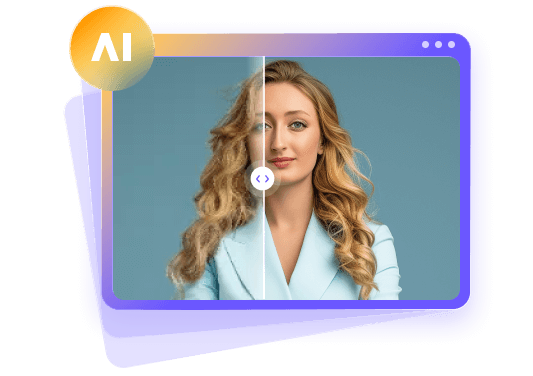
HitPaw FotorPea is a comprehensive AI photo enhancer specifically designed to improve image quality for printing. It uses advanced algorithms to intelligently analyze your photo and fix common issues such as brightness, grain, contrast, and more. It is ideal for low-resolution, blurry, old, or compressed images. The best thing is you don't need to be an expert photo editor to do this. Even a complete beginner can do it with ease.
Some of the main features of HitPaw FotorPea include:
- AI Photo Enhancement (HD/4K Upscale)
- AI Face Enrichment
- AI Denoise
- Color Correction & Clarity Boost
- Upscale Without Losing Detail
Step-by-Step Guide to Prepare Your Poster Image Using HitPaw FotorPea
Step 1.To enhance poster quality, start by downloading HitPaw FotorPea from the official website. Once the file is ready, open it and follow the quick installation steps. The setup process is simple and takes only a few minutes.




Step 2.After installation, launch HitPaw FotorPea on your computer. On the main screen, select "Enhance Photos Now." This tool is designed to improve image clarity and is perfect for enhancing poster quality.
Step 3.Next, upload the poster image you want to improve. Enable the "Denoise" feature to remove unwanted grain and blur. This step helps your poster look cleaner, sharper, and more professional.
Step 4.Click on "Preview" and allow the AI to process the image. Within seconds, HitPaw FotorPea automatically reduces noise, improves sharpness, and enhances poster quality without losing important details.
Step 5.Compare the before and after results to clearly see the improvement. Once you're satisfied with the enhanced poster quality, click "Export" and download the high-resolution image to your device.
Part 4. FAQs About High-Quality Poster Prints
If you are looking to achieve the highest clarity, 300 DPI is ideal. For large posters viewed from far away, 150 DPI also works.
Yes, you can, but it may look blurry. Therefore, you first need to upscale and enhance it using HitPaw FotorPea for better results.
TIFF and PNG offer the best quality. JPEG is also acceptable if saved at maximum quality.
Conclusion
Creating stunning, high-quality poster prints requires attention to detail at every step. It's not just about the picture itself; it's also about choosing a high-resolution image, selecting the right paper and printing method, and ensuring your color settings are correct. However, if you feel your photos are not up to standard or of low quality, make sure to use HitPaw FotorPea. Powered by an advanced AI algorithm, this AI tool makes it even easier to enhance your images before printing. With the proper steps and tools, you can create posters that look like they came straight from a studio.
Leave a Comment
Create your review for HitPaw articles