




Fixed: Why Do Android Videos Look Bad on iPhone?
 By Daniel Walker
If you've ever received a video from an Android phone on your iPhone and noticed that it looks blurry, pixelated, or low quality, you're not alone. Many users wonder why Android videos look bad on iPhone even though the original recording looks perfectly clear.
In this guide, we'll explain why Android videos look worse on iPhones, how to send videos without losing quality, and how to restore blurry videos using AI video enhancement tools.

Part 1. Why Do Android Videos Look Bad on iPhone
Android videos often appear worse on iPhones because of SMS compression, video codec differences, and limitations between the Android and iOS ecosystems. When videos are transferred between the two systems, they are frequently compressed or converted, which reduces the quality.
Below are the most common reasons this happens.
1. MMS Compression
One of the biggest reasons Android videos look bad on iPhone is MMS compression.
When a video is sent from an Android phone to an iPhone through standard text messaging, it often uses MMS instead of Apple's iMessage system. MMS has very strict file size limits, so the video is automatically compressed before being delivered.
For example, a 1080p video recorded on Android may be compressed to a much lower resolution, sometimes as low as 240p or 360p. This compression removes details and creates the blurry appearance many iPhone users see.
2. Different Video Codecs
Android often uses the HEVC (H.265) or VP9 codec for high efficiency, while older iPhones or specific software settings might prefer H.264. If the receiving device or the carrier has to "transcode" (convert) the video on the fly to ensure it's playable, the quality often takes a massive hit.
3. Resolution and Bitrate Reduction
To ensure the video sends quickly over cellular networks, messaging systems often force a resolution drop. Your 1080p or 4K video is frequently downscaled to 480p or even lower, and the bitrate (the amount of data processed per second) is slashed, removing all fine details.
4. Messaging Apps Compress Videos
Even if you aren't using standard texting, apps like WhatsApp, Facebook Messenger, and Instagram Direct often apply their own compression algorithms to save server space. Unless you send the video as a "Document," these apps will prioritize speed over clarity.
5. Android and iOS Ecosystem Differences
Apple's iMessage is a proprietary service. When an iPhone sends a video to another iPhone, it uses Apple's servers to maintain quality. When it detects an Android user, it falls back to the "lowest common denominator" (SMS/MMS), which doesn't support the high-bandwidth data required for HD video.
Part 2. How to Send Android Videos to iPhone Without Losing Quality
If you want to avoid blurry videos, the key is to send the original file without compression. Below are several effective methods.
Method 1: Use Cloud Storage
Suitable for: Large video files or 4K recordings.
Cloud storage services allow you to upload the original video file and share a download link instead of sending the video directly. Common tools include: Google Drive, Dropbox, OneDrive, etc.
 Pros
Pros
- No quality loss
- Supports large files
- Easy to share links
 Cons
Cons
- Requires uploading first
- Needs internet access
Method 2: Send Original Video via Email
Suitable for: Short videos or quick sharing.
Email can also be used to send videos without the compression that messaging apps apply. Most email services allow attachments between 20MB and 25MB, which can work for shorter clips.
Pros
- Simple and widely available
- Maintains original quality for small files
Cons
- File size limits
- Not ideal for large videos
Method 3: Use File Transfer Apps
Suitable for: Quick cross-platform transfers.
File transfer apps are designed specifically to send large files between different devices.
Popular tools include Send Anywhere, Snapdrop, and SHAREit.
These apps create a direct transfer connection or generate download links for the original video file.
Pros
- Faster than cloud uploads
- Maintains original video quality
- Supports large files
Cons
- Requires installing an app
- Connection may depend on network speed
Part 3. Pro Tip: Enhance Android Videos with HitPaw VikPea
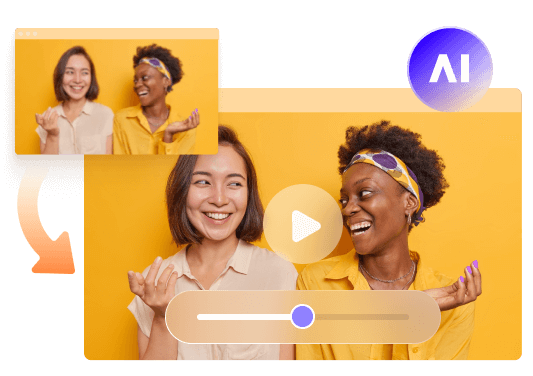
If you have already received a blurry, compressed video from an Android device, you don't have to delete it. You can use an AI-powered tool like HitPaw VikPea to restore the lost detail. HitPaw VikPea is a leading AI video enhancement tool designed to de-compress, denoise, and upscale videos automatically.
Key Features:
- 4K/8K Quality: Effortlessly upscale low-res 480p videos to 4K or even 8K.
- Multiple AI Models: Integrated with dozens of AI models like Portrait, Animation, General, Denoise, Colorizer, etc., users can use the most suitable enhancement model to upscale video quality.
- Real-time Preview: See the "Before vs. After" side-by-side before you save.
- Simple One-Click Operation: No professional editing skills required.
- Cross-Platform: Available for Windows, Mac, and as a mobile app for Android and iOS.
Step-by-Step Guide to Fix Blurry Videos:
Step 1. Import Video:Launch HitPaw VikPea and drag your blurry Android video into the Video Enhancer module.
Step 2. Choose AI Model:Select the "General Restoration Model" to remove compression artifacts or the "Portrait Model" if the video features people.
Step 3. Output Settings:Choose your desired format (MP4/MOV) and resolution (up to 4K). You can also adjust the frame rate for smoother motion.
Step 4. Preview and Export:Click "Preview" to check the results. If satisfied, hit "Export" to save your high-quality video.
Part 4. FAQs
It is usually due to MMS compression. Carriers limit the file size of standard text messages, forcing high-def videos to be compressed into tiny, low-quality files.
The best way is to use a cloud link (Google Photos/Drive) or a specialized transfer app like Snapdrop to bypass cellular messaging limits.
You can improve low-quality videos using AI video enhancement tools such as HitPaw VikPea. These tools can upscale resolution, reduce noise, and restore details lost during compression, making the video clearer and sharper.
Conclusion
While the "green bubble" struggle is real, you don't have to settle for grainy footage. By understanding why Android videos look bad on iPhone, you can choose better sharing methods like cloud links. And for those videos that are already ruined by compression, HitPaw VikPea offers the perfect solution to bring back the clarity and detail you deserve.




Leave a Comment
Create your review for HitPaw articles