




How to Remove the Fake AI Look From Pictures
 By Daniel Walker
AI image generators are widely used as they are capable of producing impressive results, but many aspects of the images still share telltale signs of being AI-made.
Skin can look overly smooth, lighting may appear too uniform, and colors often feel cleaner than they would in a real photograph. Addressing these details can lead to generating more realistic pictures. Making a few adjustments after generation can make a big difference.
In this guide, we will talk about eight ways to make AI-generated images look more natural, and cover a quick option for improving results when you do not want to do manual edits.

Part 1: Why Do AI Pictures Look Fake?
You cannot solve a problem without first recognizing that it exists. Similarly, to make AI-generated images look more realistic, you should first be able to make sense of what makes them artificial in the first place. Three major aspects that you should look at closely are.
Skin: If it is a picture of a person, skin is one of the biggest giveaways, as AI often produces faces with smooth and waxy skin without the slight unevenness that real faces have.
Lighting: Lighting can create similar problems. Instead of the natural contrast produced by a camera, AI-generated scenes sometimes have light spread too evenly, which makes the image look flat.
Color: When saturation is pushed too far, the result can feel more like digital artwork than a photograph.
There are other signs that are more structural, that are easier to spot when you know what you are looking for. Such as hands may have an extra or a missing finger, reflections and shadows can be inconsistent, sometimes the background is blurry, and merges the details.
Once you recognize these recurring issues, improving AI image realism becomes a more deliberate and controlled process.
Part 2: How to Remove the AI Generated Look Fast (Easy Fixes That Work)
The eight techniques that we discussed give you control over the final result but they take up time and require a degree of practice. If you do not wish to do manual changes and want a finished image that looks real, this is where a specific tool becomes necessary.
One such tool is HitPaw FotorPea. It is an AI photo editor built to make AI-generated images look real with very little manual effort. Instead of adjusting colour saturation, sharpness, and texture one at a time, HitPaw FotorPea makes the necessary changes in a single step. It is a practical choice for users who want more realistic results without spending too much time editing every little detail.
Features of HitPaw FotorPea
The tool offers a comprehensive set of features aimed specifically at the fake AI look:
- Automatic realism improvements: Detects common AI tells and tweaks without manual step.
- Natural skin texture: Helps with texture and fine facial detail when skin appears overly smooth.
- Better lighting balance: Refines highlights and shadows to create lighting with more depth and direction.
- More realistic colors: Reduces excessive saturation and adjusts white balance.
- Subtle texture & detail: Introduces subtle surface texture and film-like grain to reduce the overly clean appearance.
- Softer imperfections: Softens the overly polished look by reintroducing small variations and imperfections.
- User-friendly interface: Its layout is simple making it easier to use even for a novice.




Overall, HitPaw FotorPea covers the same ground as the manual techniques, only faster and with far less effort.
How to Use New AI Realism Model of HitPaw FotorPea
Using it is straightforward, it is just four step process:
Tips: It comes soon in FotorPea V5.5.0, remember to upgrade and use it!- 1. Import your image:Start by importing the AI-generated image you want to improve.
- 2. Select the realism feature:Select the AI enhancement or realism option, and let the tool process the image automatically.
- 3. Preview and adjust:Check the preview and adjust the effect if you want a stronger or more subtle change.
- 4. Export your photo.Save the finished image in your preferred format and resolution.
Part 3: Before-and-After Images of HitPaw FotorPea's AI Realism
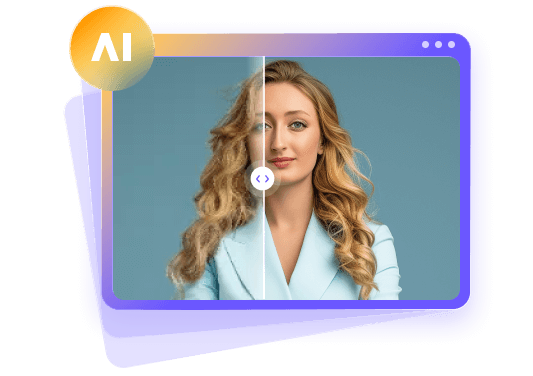
Side-by-side comparison between two images makes it easier to spot the changes. The original AI-generated image may appear smooth, saturated with flat lighting. After editing, details such as skin texture become more visible, directional light, and overall colour balance feel closer to what you would expect from a real photograph.
In most cases, the change is significant without looking over-processed. The subject remains consistent, only now the image resembles a real photograph rather than a generated one.
Part 4: 8 Effective Ways to Make AI Images Look More Realistic (Prompt Used!)
By now, you have an idea as to why AI-generated images look unrealistic, so you can correct each issue directly. The eight techniques that you can use to improve the AI-generated image quality are simple and repeatable, and applying even a few of them is likely to produce a significant improvement in realism.
1. Use Photography Language
AI image generators are sensitive to and rely heavily on the language used in prompts. Instead of simply writing the prompt " a photo of a woman", add details like a photographer would. It could be the details about the camera type, lens choice, aperture, and ISO settings.
Adding references such as "shot on 35mm film" or "shallow depth of field" can guide the output toward more natural-looking results that resemble real camera behavior.
2. Add Real Lighting
Uniform and overly even lighting is a telltale sign of AI generation. It gives the image a flat look, which is a big deviation from real scenes that have some bright areas and shadows that fall consistently.
As lighting plays a major role in how realistic an AI-generated image appears, the prompt given should specify conditions clearly. Add details like golden hour, soft light through the window, or harsh midday sun to the prompt to get more realistic results.
3. Avoid Perfect Faces
Faces that appear perfect, too symmetrical or overly smooth and waxy look artificial at first glance. In real life, people have imperfections, uneven features, slight irregularities, fine hair and visible skin texture.
You can add these details to the prompt for the AI generator. Ask for "natural skin texture," "freckles," or a "candid expression" to break the doll-like smoothness.
4. Use Better Camera Angles
AI generated images usually have a default straight-on, centered composition that can feel slightly staged. Real photography, by contrast, rarely relies on a single fixed viewpoint.
Use a prompt that adds a specific angle, such as low-angle, two-quarter view; these details can make a notable difference. This also adds a human touch to the images as they mirror the choices a photographer would make.
The framing alone can make an image feel captured rather than generated.
5. Add Environmental Context
Real photography has environmental details in it that frame the subject and add context to the scene, which is often missing in AI-generated images. Describing the setting around the subject, adding elements like a cluttered desk or busy street, helps anchor the subject within a believable setting.
6. Reduce Over-Sharpening
AI generated images come out as sharp, with over-exaggerated edge contrast, unlike real photographs. Toning down the image sharpness and introducing subtle background blur can help give the image more depth and a more realistic look.
The subject then separates more naturally from the scene, much like it would in an actual photograph.
7. Fix Oversaturated Colors
Just like sharpness, the colors of AI-generated images lean towards overly intense. Skin tones can appear too warm, skies unnaturally blue, and greens more vivid than they would be in a real scene. Bringing saturation back toward neutral and adjusting white balance to match a single light source helps the image feel more grounded.
Real cameras rarely produce perfectly saturated or uniform colours, so a slightly muted result is likely to read as more authentic.
8. Add Subtle Texture & Grain
An image that is too clean and smooth is the easiest giveaway of a generated image. Real images have texture or sensor noise, even in well-lit conditions. Introducing a light layer of grain or fine surface texture can help recreate that natural imperfection.
This finishing touch ties the whole image together and removes the last traces of the synthetic look.
FAQs
AI Images look fake because they lack any noise, texture, and appear perfect. An image of a person has waxy smooth skin, the lighting is too flat without consistent shadows and the colours are over saturated. Structural errors such as jumbled text, distorted hands and fingers are also a big giveaway that the image is fake. As a result, the image reads as designed rather than captured.
Correcting the usual visual flaws in AI-generated images is often enough to make them look more realistic. To do that you should give more detailed prompts to the AI generator. It should be based on instructions like the ones a photographer will use when capturing an image.
The AI look can be reduced either by manual editing or by using automated enhancement tools like HitPaw FotorPea. The choice mainly comes down to how much control versus convenience you want.
AI generated skin often appears too perfect as it lacks the fine details like pores, lines, subtle variations, that the real skin has. Without that texture, the surface reflects light too evenly, which gives it a waxy, doll-like quality.
Conclusion
Improving the realism of AI generated images involves reducing the overly polished look that the AI generator tends to produce. Real images have texture, varying light, softer colour balance and small imperfections.
Restoring these elements can make a noticeable difference. This can be done through prompt adjustments, manual editing or automated tools, depending on how much control you want over the final result.
The difference between an obviously artificial image and a believable one is often smaller than expected. With the right adjustments, that gap can be reduced quickly, even without fine-tuning every detail by hand. The focus is simply on replacing the overly clean finish with details that feel more grounded and photographic.
Leave a Comment
Create your review for HitPaw articles


