




Why Did Your AI Attractiveness Test Score So Low? FIx It Now
 By Daniel Walker
You uploaded a selfie, tried an AI attractiveness test, and suddenly got a score much lower than expected. Meanwhile, someone else somehow scored 90/100 with what looks like an average photo. So... what happened?
Before you start questioning your looks, here's something important to know: AI attractiveness tests don't judge beauty the same way humans do. A low score doesn't necessarily mean you are unattractive. In many cases, the result has more to do with lighting, image quality, camera angle, facial expression, and even hairstyle than your actual appearance.
In fact, the exact same person can receive completely different scores just by changing a photo. A blurry selfie taken in bad lighting may score far lower than a clear portrait with softer lighting and a more flattering angle.
So, why is your AI attractiveness score low? What is AI actually looking at, and can you improve your results? Let's break it down.
Part 1. Why Is My AI Attractiveness Score So Low?
If your AI attractiveness test score feels unfair, you are definitely not alone. One of the biggest misconceptions about an AI beauty score is that it reflects your real-life attractiveness. In reality, most AI attractiveness tests analyze the photo quality, not just the person. That means a bad image can sometimes lead to a surprisingly low result.
1. Poor Lighting Can Hurt Your Score
Lighting changes everything. Harsh overhead lighting, dark rooms, or heavy shadows can make facial features appear uneven or less defined. Since many AI attractiveness tests rely on facial clarity and symmetry, poor lighting can easily lower your score.
A simple change to soft natural lighting or front-facing light can sometimes make a dramatic difference for you.
2. Low-Quality or Blurry Photos Matter More Than You Think
Image quality plays a huge role in AI analysis. If your selfie is blurry, pixelated, or compressed, AI may struggle to accurately recognize facial details.
This is one reason why someone using a sharp, high-quality portrait may score much higher than another person with a lower-quality image-even if they look similar in real life.
3. The Wrong Camera Angle Can Change Facial Proportions
Ever notice how your face looks different depending on the camera?
Extreme close-ups, awkward selfie angles, or top-down shots can distort proportions and make features appear unbalanced. Since AI attractiveness tests often evaluate facial balance, even a small angle change may affect your score.
4. Your Expression and Overall Vibe Matter
AI doesn't just analyze structure-it often reacts to facial expressions too.
A tired look, poor posture, or neutral expression may appear less engaging than a confident smile or relaxed expression. Sometimes, the difference between a low and high score is simply choosing a photo where you look more confident and comfortable.

The good news? A low score does not always mean there is something wrong with your appearance. In many cases, changing the photo can completely change the result. But that raises another question: what exactly is AI looking at when rating attractiveness?
Part 2. What Does the AI Attractiveness Test Actually Look
So, what exactly is an AI attractiveness test analyzing? Most AI beauty tests look at a combination of facial symmetry, proportions, skin clarity, and facial expression to estimate attractiveness. In simple terms, AI tends to favor photos where facial features appear balanced, clear, and well-lit.
For example, uneven lighting or blurry images can make facial details harder to detect, while a flattering angle or softer lighting may create a stronger first impression. Some tools may also react to overall facial vibe, such as confidence, expression, or how polished the image looks. That's why the same person can receive completely different scores from different photos.
Since factors like image quality, lighting, and overall style can influence your score so much, relying on just one random selfie may not give you the most accurate result. Trying different photos or styles can often give you a better sense of what actually works best for you.
Part 3. Test Your AI Attractiveness Smarter with HitPaw FotorPea
Since your AI attractiveness score can change dramatically depending on the photo, relying on one random selfie may not tell the full story. Instead of accepting a low score right away, why not test different versions of yourself first?
With HitPaw FotorPea, you can do more than just upload a selfie and hope for a better result. You can experiment with different styles, restore facial details, and enhance photo quality to create a more flattering and accurate image for an AI attractiveness test. Whether you want to try a new aesthetic, fix blurry facial features, improve lighting, or generate a clearer portrait, HitPaw FotorPea makes it easier to explore different versions of yourself and see what truly suits you best.
Instead of relying on one random selfie, HitPaw FotorPea helps you test different versions of yourself and improve photo quality before taking another AI attractiveness test.
Key Features of HitPaw FotorPea
- Generate different attractive styles from one selfie, including clean girl, soft glam, Y2K, old money, K-pop idol, and cinematic looks.
- Experiment with hairstyles, makeup, and aesthetics to discover what suits your face best.
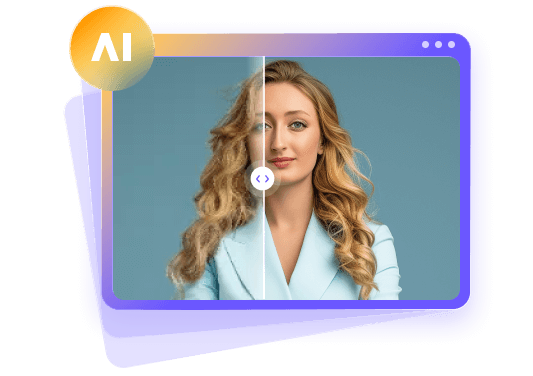
- Enhance blurry or low-quality selfies for clearer facial details and more reliable AI analysis.
- Improve lighting and portrait clarity to create a stronger first impression.
- Try different looks in a private, user-friendly way to see what styles feel most flattering to you.



Simple Steps to Test Your Best Look
1.Before uploading your image, make sure your photo quality, lighting, and overall clarity look good for a more accurate AI attractiveness test.
- 2.Open the AI Generator in HitPaw FotorPea and choose image to image.
- 3.Enter your preferred image-to-image prompt to explore different attractive styles.
- 4.Generate your results and download your AI attractiveness test report to compare different versions of yourself.
Image Prompt for AI Attractiveness Test:
-
You are an AI visual face analysis system that generates an entertainment-style "Attractiveness & Personality Impression Report Card" based only on visual impression. Analyze a human face
image and return a clean, mobile app-style aesthetic scoring dashboard. Do not claim objective truth, diagnose personality, intelligence, or real traits-use visual impression language only. Output
should include: an Overall Attractiveness Score (0-100) with a short impression tagline (e.g. "Highly attractive", "Naturally charming"); six sub-scores in percentage format (Handsomeness/Beauty,
Cuteness, Face Shape Harmony, Skin Smoothness, Facial Symmetry, Visual Appeal); 2-4 optional visual impression tags (e.g. friendly, confident, elegant, youthful, warm, soft); and a facial age
estimation ("Facial Age: XX"). Present everything in structured JSON-like UI data optimized for rendering into a clean modern dashboard with rounded cards, soft gradient background, minimal
typography, premium purple/blue accent tones, and a high-end AI beauty scanner app aesthetic."
After using AI to test your attractiveness, you can know that improving your photo quality and exploring different styles can often lead to a more accurate and flattering AI attractiveness result.
Part 4. 6 Ways to Instantly Improve Your AI Attractiveness Score
A low AI attractiveness score does not always mean something is wrong with your appearance. Sometimes, small changes can make a surprisingly big difference. Here are a few simple ways to improve how AI analyzes your face.
1. Find the Right Hairstyle for Your Face
The same face can look completely different with a new hairstyle. If you are unsure what suits you best, try testing different haircuts or aesthetics using an AI tool to try your new fresh hairstyle before taking another attractiveness test.
2. Improve Lighting and Photo Angles
Poor lighting and awkward angles often lower face analysis results. A brighter portrait with softer lighting and a front-facing angle usually helps facial details appear clearer and more balanced.
3. Upgrade Your Image Quality
Blurry selfies or low-resolution photos can confuse AI beauty scanners. You can enhance image clarity and sharpen facial details with HitPaw FotorPea's AI Photo Enhancer before testing may lead to more reliable results.
4. Remove Beard for Male Test Results
For male users, facial hair can dramatically affect attractiveness scores. Some people look stronger with a beard, while others appear younger or cleaner without one. Testing both versions can help you compare what works best.
5. Use Photo Retouch for Better Face Analysis
Small touch-ups such as smoother skin, clearer lighting, or balanced facial details can sometimes improve how AI interprets your image-without making the photo look unrealistic.
6. Try a Slimmer Face Look
Different face shapes create different impressions in AI analysis. Testing a slightly more defined or slimmer face look can help you understand what style feels most flattering for your features.
At the end of the day, AI attractiveness tests are not fixed judgments. Sometimes, finding your best look is simply about experimenting with the right style, photo quality, and presentation.
FAQs of AI Attractiveness Test
An AI facial attractiveness test tool uses artificial intelligence to analyze facial features, symmetry, proportions, image quality, and expressions to estimate an attractiveness score based on visual patterns.
Low scores are often caused by poor lighting, blurry images, awkward angles, or facial expressions-not necessarily your real appearance. Even changing one photo can lead to a completely different result.
Yes. AI attractiveness tests are not perfect because beauty is subjective. Different tools may score the same person differently depending on the image and analysis method.
Try improving photo quality, lighting, hairstyles, and overall style before testing again. You can also use tools like HitPaw FotorPea to experiment with different looks, enhance image clarity, or test what style suits you best.
Absolutely. The same person can receive very different scores depending on lighting, angle, image quality, hairstyle, makeup, or facial expression.
Conclusion
Getting a low score on an AI attractiveness test does not automatically mean you are unattractive. In many cases, your result is influenced by factors like lighting, image quality, hairstyle, camera angle, and facial expression more than you might think.
However, AI attractiveness scores are not fixed. Even small changes can dramatically affect how AI analyzes your face. Instead of relying on one random selfie, try experimenting with different styles, better-quality photos, and more flattering looks to see what works best for you.
If you are curious about how different aesthetics, hairstyles, or photo enhancements may affect your results, tools like HitPaw FotorPea can make it easier to explore different versions of yourself before taking another AI attractiveness test. You may discover that the best-looking version of you is simply one you have not tried yet.
Leave a Comment
Create your review for HitPaw articles


