





How to Transfer Google Photos to External Hard Drive Easily [2026]
 By Daniel Walker
The digital world offers consumers an infinite number of possibilities to preserve memories in photo or video format. However, it is tiresome to the user to handle, sort, and search through the important images in a cluttered bunch. As the photo library grows, users might find themselves losing storage space and more. In this case, creating a backup can help safeguard essential photos, which can be accessed from any device.
The seamless backup process ensures that you don't lose any of your important moments. Another best method you can learn is how to transfer Google Photos to external hard drive. It provides greater security, offers offline accessibility, and grants more space. Now, let's go through all these useful methods and their procedure in this article to manage your photos effortlessly.
Part 1. How to Move Google Photos To External Hard Drive: 3 Methods
As discussed, users can benefit from transferring their important photos to an external hard drive. So, to execute this process, go through the following methods:
Method 1. Download Google Photos Via Google Photos Website
Users can directly download selective photos or albums from their Google Photos website and choose an external drive to send them to. This process is best for those who want to choose which photo to download instead of downloading every image. Also, it offers you precise control over the contents without needing any special application. Now, learn how to download all Google Photos to hard drive by following these steps:
Step 1.Open Google Photos, hit the three vertical dots at the top right, and choose the "Download" button to save the photos.

Step 2.After that, connect an external hard drive to your computer, and head to the folder on File Explorer with the saved photos. From here, right-click the folder, access the menu of "Send To," and choose a drive.
Method 2. Download Google Photos To External Hard Drive Via Google Takeout
One of the best services Google provides is Google Takeout, which is designed to export data in bulk quantities. Moreover, you can choose the mode of transfer, file type, and size from 1 GB to 50GB, making it ideal for emergency backups. You can carry out this process by learning how to move Google Photos to hard drive with these steps:
Step 1.Head to the Google Takeout website, log in with your account, and access "Select Data to Include." From here, only select "Google Photos," choose specific albums from the "All Photo Albums Included," and hit "Next Step".
Step 2.Moving forward, pick a "Transfer To" choice from under the "Destination" section, and head to "File Type & Size." Choose a "File Type," like ZIP or TGZ, select "File Size," and hit "Create Export." After that, the photos will be sent to your mode of transfer, from where you can transfer to your hard drive.
Method 3. Backup & Sync Google Photos To External Hard Drive (Google Drive)
To ensure that your photos are always readily available to you, try creating a backup. It is appropriate for those users who frequently add or modify photos and want their backup to remain up-to-date. In addition, it guarantees that your external hard drive will always have the most up-to-date version of your Google Photos. To reduce the risk of data loss, learn how to backup Google Photos to a hard drive by following these steps:
Step 1.After installing Google Drive, log in with your Google credentials, and press the "+ Add More Folders to Sync" option under the "Quick Links" section.
Step 2.Next, choose the photos folder, tick "Sync with Google Drive" within the "Settings" dialogue box, and press "Done".
Step 3.On the "Google Drive Preferences" window, hit the "Save" button when the folder is uploaded within the "My Laptop" tab.
Step 4.Afterward, on the main interface, click the three vertical dots next to the synced photos to "Open in File Explorer".
Step 5.Once the folder is located, right-click it, extend the "Save To" option, and send it to your external hard drive.
Part 2. Transfer Google Photos to Hard Drive: 5 Tips You Must Follow
After going through the comprehensive guides on how to transfer Google Photos to hard drive, let's look at various tips you can utilize for photo transferring:
- 1. Create Folders:It is important that users create folders or albums to arrange their photos in order to make the downloading process easier.
- 2. Enjoy Fast Internet:You can use a swift and vigorous internet connection to obtain large amounts of photos in a single sweep.
- 3. External Hard Drive Transfer:There should be a check on the compatibility and formatting of the hard drive with your system to have a faster transfer.
- 4. Check File Integrity:When you're done moving the images, verify that nothing is missing, like an important image, and more.
- 5. Storage Space:Prior to transferring images, ensure that there is sufficient free space in your external hard drive; otherwise, there is a tendency for transfer failure.
Part 3. Enhance Your Google Photos Before Backing Up -Try HitPaw FotorPea
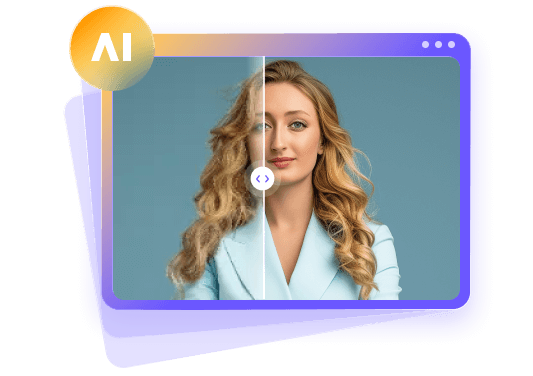
One thing to note is that before you back up your images to an external hard drive, take your time to make them perfect. It can be a frustrating situation if your images come out blurry, low-resolution, or filled with noise. Therefore, the best solution is to use HitPaw FotorPea (formerly HitPaw Photo Enhancer), which uses AI technology to enhance and brighten your event or travel photos. The process ensures your image backups are organized and clutter-free.
Features
- 1.Easily retouches the facial features and skin textures so that the portraits are natural and smooth.
- 2.Converts black and white images into realistic color, providing realistic and vibrant images.
- 3.Removes noise and blur from images to get detailed and clear photos in a polished form.
- 4.Upscale pictures up to 16K resolution for crisp and high-definition results.
- 5.Intelligently decodes monochrome tones for perfectly natural-looking images.
How to Elevate Image Quality of Google Photos Before Transfer?
HitPaw FotorPea offers users a wide range of AI Models for converting their low-light, blurry, and noisy pictures into stunning portraits. You can also learn to enhance your essential pictures by following these comprehensive steps:
Step 1. Import Images on HitPaw FotorPea for Enhancement
Access the main interface of the photo editing and enhancing software, and from the "Home" tab, click the "Enhance Photos Now" to import blurred Google images.




Step 2. Toggle the Face Model for Enhancing Image
On the next screen, toggle the "Face Model" or let FotorPea automatically select a model, before you press the "Preview" button.
Step 3. Side-by-Side Preview and Export the Improved Image
After the image is enhanced, get a comparison result, and click the "Export" button to save it.
FAQs on How To Move Google Photos To Hard Drive
Yes, you can transfer all the photos at once using the Google Takeout service, as it can export your full library in bulk from 1 GB to 50 GB. Other than that, you can share a large number of images with Partner Sharing to another Google Account.
The faster photo transferring method is using Google Takeout, which creates a large export and offers a ZIP file with all of your images. It's one of the most efficient and fastest ways to get every Google Photo on your device with ease.
It usually depends on the types and quantity of image files you're trying to download and store on the hard drive. However, you should have at least 500 MB to 4TB, as it's sufficient for documents, photos, and HD videos.
It is possible to access photos on an external hard drive as it does not rely on an internet connection to operate. You can plug it into your computer and access its content whenever you want without any hassle.
Conclusion
In the end, this article sheds light on the matter of how to download Google Photos to hard drive. For security, offline accessibility, and having a backup, this article provided the best 3 methods with step-by-step guides. If somehow the photos came out blurry and unfocused, utilize HitPaw FotorPea and its 9 AI models for the ultimate enhancement features and high-resolution results.
Leave a Comment
Create your review for HitPaw articles