





UHD vs 4K: What's the Difference and Which Resolution Is Better?
 By Daniel Walker
UHD and 4K are two terms that are often used interchangeably when talking about high-resolution displays, videos, and images. Although they are closely related, they do not refer to exactly the same resolution standard. UHD is mainly used for consumer devices such as TVs, monitors, and streaming services, while 4K originally refers to a cinema resolution standard.
Understanding the difference between UHD and 4K can help you choose the right display, video format, or image enhancement method. However, resolution alone does not always determine image quality. For low-resolution images, improving details and clarity through AI enhancement can often make a bigger difference than simply increasing pixel dimensions.

Quick Decision: Which One Fits Your Needs?
If you are choosing between UHD and 4K, the best option depends on your use case:
- For TVs, monitors, and streaming content:
- For professional cinema production:
- For gaming and PC monitors:
- For improving low-resolution images:
UHD (3840 × 2160) is the standard choice for most consumers and provides excellent image quality for daily viewing.
DCI 4K (4096 × 2160) is designed for digital cinema workflows with a wider aspect ratio.
UHD is usually enough unless you need professional video production features.
Simply resizing an image to 4K does not guarantee better quality. AI-powered 4K upscaling can help enhance details, reduce noise, and improve clarity while increasing resolution.
At a Glance: Key Differences & Specifications
| Feature | UHD | 4K |
|---|---|---|
| Resolution | 3840 × 2160 | 4096 × 2160 (DCI 4K) |
| Main Use | TVs, monitors, streaming, consumer devices | Digital cinema production |
| Aspect Ratio | 16:9 | ~17:9 |
| Pixels | ~8.3 million | ~8.8 million |
| Common Users | Home users, gamers, content viewers | Filmmakers and cinema professionals |
Overview of UHD and 4K
What Is UHD Resolution?
Ultra High Definition (UHD) is a consumer display resolution standard with 3840 × 2160 pixels, which provides four times the pixels of Full HD (1920 × 1080).
UHD is widely used in:
- 4K TVs
- Computer monitors
- Streaming platforms
- Gaming displays
- Consumer cameras
Because UHD uses the familiar 16:9 aspect ratio, it has become the most common high-resolution format for everyday users.
What Is 4K?
4K originally refers to a resolution standard used in digital cinema, known as DCI 4K, with a resolution of 4096 × 2160 pixels.
Compared with UHD, DCI 4K has:
- A slightly wider horizontal resolution.
- A cinema-focused aspect ratio of approximately 17:9.
- A focus on professional film production.
However, many consumer products and platforms use the term "4K" to describe UHD resolution, which is why the two terms are often confused.
How to Upscale an Image to 4K
Resize an Image to 4K Manually
Manually resizing an image means changing its dimensions to match 4K resolution, such as 3840 × 2160 pixels.
Basic process:
- 1.Open the image in an editing tool.
- 2.Change the image dimensions to 3840 × 2160.
- 3.Export the resized image.
However, standard resizing only increases pixel numbers. It cannot recreate details that are missing from the original image.
This method works for:
- Images that are already high quality.
- Simple size adjustments.
It is less effective for:
- Blurry photos.
- Old images.
- Low-resolution images.
Enhance and Upscale Images to 4K with HitPaw FotorPea
HitPaw FotorPea is an AI photo enhancement tool that helps users upscale images while improving overall visual quality.
key features
AI Super Resolution
- Upscale images to higher resolutions while maintaining better details.
AI Image Enhancement
- Improve clarity, sharpness, and overall image quality.
Denoise and Detail Recovery
- Reduce noise and enhance important visual details.
Multiple AI Enhancement Options
- Choose suitable AI tools based on different image quality problems.
 Pros:
Pros:
- Improves both resolution and image quality.
- Easy for beginners.
- Helps restore details from low-quality images.
 Cons:
Cons:
- Requires desktop installation.
- AI enhancement results depend on the original image quality.
Step-by-Step: Enhance and Upscale Images to 4K with FotorPea
Step 1: Download HitPaw FotorPea




Step 2: Upload Your Image
Import the low-resolution image you want to enhance into HitPaw FotorPea.
Step 3: Select an AI Enhancement Option
Choose the appropriate AI model to improve resolution, details, and clarity.
Step 4: Preview and Export the 4K Image
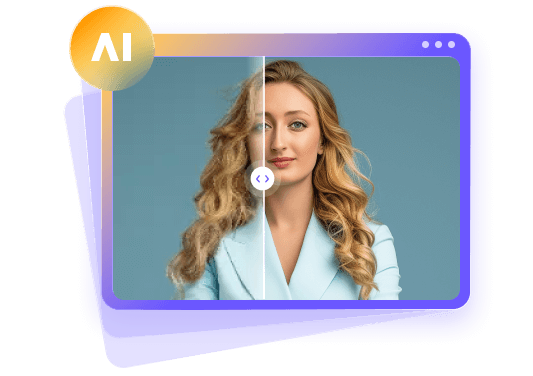
Compare the enhanced result with the original image and export the improved version.
Which Resolution and Enhancement Method Should You Choose?
| Method | Best For | Result |
|---|---|---|
| Standard Resize | Changing image dimensions | Larger image size but limited detail improvement |
| Manual Editing | Users who want control over adjustments | Requires editing skills |
| AI Enhancement | Low-quality images needing improvement | Higher resolution with improved details |
For simple resizing, traditional tools may be enough. However, if your image is blurry, compressed, or lacks details, AI enhancement provides a better solution because it improves both resolution and visual quality.
HitPaw FotorPea is a practical choice for users who want to upscale images to 4K while enhancing details and clarity at the same time.
Common Mistakes When Upscaling Images to 4K
1. Assuming 4K Automatically Means Better Quality
A higher resolution does not always create a clearer image. Low-quality images may still look blurry after resizing.
2. Confusing UHD with DCI 4K
UHD and 4K are closely related but have different technical definitions.
3. Simply Enlarging a Low-Resolution Image
Increasing pixel dimensions does not restore missing details.
4. Over-Sharpening the Image
Too much sharpening can create unnatural edges and visual artifacts.
5. Ignoring Aspect Ratio
Changing resolution without maintaining the correct aspect ratio may distort the image.
6. Not Checking Results at 100% Zoom
Always inspect details closely to check for blur, noise, or artifacts.
FAQs About UHD and 4K
UHD and 4K are often used interchangeably in consumer products, but technically they have different resolutions. UHD is 3840 × 2160, while DCI 4K is 4096 × 2160.
4K refers to a resolution standard with approximately 4,000 horizontal pixels. In consumer products, it usually refers to UHD resolution.
For most consumers, the difference between UHD and 4K is minimal. UHD is sufficient for TVs, monitors, and streaming.
Yes. You can resize an image to 3840 × 2160 using editing software. AI enhancement tools can also improve details during upscaling.
Standard upscaling only increases image size. AI-powered upscaling can improve details, sharpness, and overall image quality.
Conclusion
UHD and 4K are often used interchangeably, but they represent different resolution standards. For most users, UHD is enough for daily viewing, while DCI 4K is mainly used in professional cinema.
When improving low-resolution images, simply resizing to 4K may not enhance the actual quality. HitPaw FotorPea uses AI-powered enhancement and super resolution to upscale images while improving details, sharpness, and overall clarity, making it a practical choice for creating higher-quality 4K images.
Leave a Comment
Create your review for HitPaw articles