





UHD Explained: Definition, Resolution, Types, and Uses
 By Daniel Walker
UHD, short for Ultra High Definition, is a high-resolution standard commonly used in modern TVs, monitors, streaming services, gaming devices, videos, and images. Compared with HD and Full HD, UHD provides significantly more pixels, allowing users to view sharper details and clearer visuals.
However, UHD is not only about increasing resolution. Image quality also depends on the original source, processing technology, and enhancement methods. In this guide, we will explain what UHD means, its resolution, different types, common uses, and how to enhance images to UHD quality with AI.

What Does UHD Mean?
UHD stands for Ultra High Definition, a resolution standard designed to provide more detail and clarity than traditional HD formats.
Unlike HD (1280 × 720) and Full HD (1920 × 1080), UHD offers a much higher pixel count, allowing displays and media content to show sharper images with more visible details.
Today, UHD is widely used in:
- TVs and monitors
- Streaming platforms
- Gaming consoles
- Cameras and videos
- Digital images
When people search for what does UHD mean or what is UHD, they are usually referring to the high-resolution format commonly found in consumer devices.
What Is the Standard UHD Resolution?
What Is 3840 × 2160 UHD Resolution?
The standard UHD resolution used in most consumer products is 3840 × 2160 pixels.
This resolution contains approximately 8.3 million pixels, which is four times the pixel count of Full HD (1920 × 1080).
Because of its high pixel density, UHD is often called 4K UHD in consumer markets, especially for TVs, monitors, and streaming content.
How Does UHD Resolution Affect Image Quality?
A higher UHD resolution can improve image quality by providing:
- More visible details
- Sharper edges
- Better clarity on large screens
- More realistic textures
However, resolution is not the only factor that determines image quality.
Other factors also matter, including:
- Original image or video quality
- Sharpness
- Noise levels
- Compression quality
- Image processing technology
For example, a low-quality image resized to UHD dimensions may still look blurry because increasing pixels does not automatically restore missing details.
UHD vs Full HD Resolution
| Feature | Full HD | UHD |
|---|---|---|
| Resolution | 1920 × 1080 | 3840 × 2160 |
| Pixel Count | About 2.1 million | About 8.3 million |
| Common Use | Standard TVs, videos | 4K TVs, monitors, streaming |
| Detail Level | Good | Higher clarity and sharpness |
UHD provides four times more pixels than Full HD, making it better suited for larger displays and high-quality viewing experiences.
Where Is UHD Resolution Commonly Used?
TVs and Monitors
UHD is widely used in modern televisions and computer monitors.
Benefits include:
- Sharper images on larger screens
- More detailed visuals
- Better viewing experiences for movies, games, and creative work
Streaming and Video
Many streaming platforms provide UHD content for users with compatible devices and internet connections.
UHD video can offer:
- Higher clarity
- More detailed scenes
- Better viewing quality on large displays
Gaming
UHD gaming allows players to experience sharper graphics when both the game and hardware support higher resolutions.
Benefits include:
- Clearer environments
- More detailed textures
- Improved visual quality
However, achieving smooth UHD gaming also depends on GPU performance and display capabilities.
Photos and Images
UHD can also describe images with dimensions close to 3840 × 2160 pixels.
For digital images, UHD resolution is useful for:
- Large displays
- Presentations
- Printing
- High-quality digital content
However, simply changing a low-resolution photo to UHD dimensions does not automatically improve quality. The image may become larger but still lack details and clarity.
How to Enhance an Image to UHD with HitPaw FotorPea
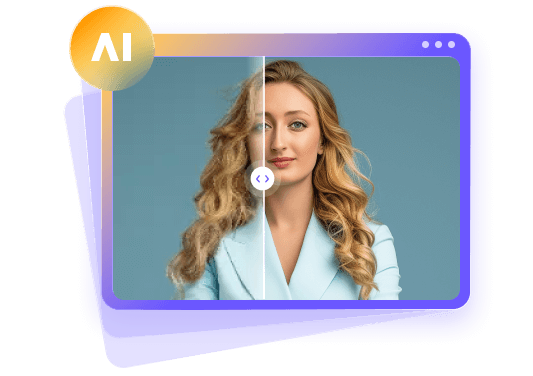
HitPaw FotorPea is an AI-powered image enhancement tool that helps users upscale images to UHD quality while improving overall clarity and details. Instead of simply enlarging image dimensions like traditional resizing methods, FotorPea uses AI technology to enhance sharpness, reduce noise, and restore visual details during the upscaling process. It is especially useful for improving low-resolution, blurry, old, or compressed images and preparing them for larger displays or high-quality output.
Key Features
AI Image Upscaling
- Increase image resolution while maintaining better details.
- Improve low-quality images for larger displays.
AI Enhancement
- Automatically optimize image clarity and sharpness.
- Improve overall visual quality.
Detail Recovery
- Enhance textures and important details in photos.
Noise Reduction
- Reduce unwanted noise from low-quality images.
Step-by-Step Guide to Enhancing an Image to UHD
Step 1: Download HitPaw FotorPea




Step 2: Upload Your Image
Open HitPaw FotorPea and import the image you want to enhance.
Step 3: Select an AI Enhancement Model
Choose the appropriate AI model based on your image type.
Step 4: Preview and Export the UHD Image
Preview the enhanced result, compare it with the original image, and export the improved version.
FAQs About UHD
UHD stands for Ultra High Definition, a high-resolution standard that provides more pixels and clearer images than HD and Full HD.
The standard UHD resolution is 3840 × 2160 pixels, containing approximately 8.3 million pixels.
Yes. UHD provides four times more pixels than Full HD, resulting in sharper and more detailed visuals.
UHD and 4K are often used interchangeably, but technically they are different. UHD refers to 3840 × 2160, while professional DCI 4K uses 4096 × 2160.
Yes, you can resize an image to UHD dimensions. However, AI enhancement tools like HitPaw FotorPea can improve details and clarity during the upscaling process.
Conclusion
UHD (Ultra High Definition) is a high-resolution standard widely used in displays, videos, gaming, and images. The most common UHD format is 3840 × 2160 pixels, which provides four times more pixels than Full HD.
However, increasing resolution alone does not always improve image quality. For low-resolution or blurry images, AI enhancement can help restore details and improve clarity.
HitPaw FotorPea provides an AI-powered way to enhance images to UHD quality by combining resolution upscaling with detail improvement, sharpening, and overall image enhancement.
Leave a Comment
Create your review for HitPaw articles