





DxO PhotoLab vs Lightroom: Which Is Better for Photographers in 2026?
 By Daniel Walker
DxO PhotoLab and Adobe Lightroom are some of the most popular photo editing applications that photographers use, but they are prioritized differently. The biggest difference between DxO PhotoLab vs Lightroom is the fact that PhotoLab is more concerned with the quality of the RAW images, noise reduction and lens corrections, whereas Lightroom is more efficient when it comes to organizing the photographs, connecting with the cloud and flexibility. Their image quality, editing capabilities, performance, organization, price, ease of use, and real-world performance are compared to each other to give a better chance to find an option that is more viable in 2026 and enable photographers to identify the viable option and choose it in 2026.

Quick Decision: Which One Fits Your Workflow?
- When you are focused more on high-quality RAW processing, high-quality noise reduction, and accurate lens corrections → Select DxO PhotoLab.
- When you need excellent photo organisation, cloud syncing, editing on the move, and a workflow that is more connected → Select Lightroom.
DxO PhotoLab is more about deriving the best out of the RAW files in terms of quality, and Lightroom offers a wider editing and photo-management environment. PhotoLab can be favored by those photographers who appreciate the technical quality of images, and Lightroom will be more convenient for those who have to handle a big library or do cross-platform editing.
Overview of DxO PhotoLab vs Lightroom
DxO PhotoLab Overview
DxO PhotoLab 9 is professional RAW photo editing software, which is oriented toward image quality, optical and local corrections. Its DeepPRIME technology is based on machine learning to minimize noise, preserve fine details, and enhance color, which is especially beneficial for high-ISO and low-light images.
DxO PhotoLab Key Features
- DeepPRIME 3 & XD3: AI helps reduce noise while preserving fine details and color.
- DxO Optics Modules: Can automatically correct distortion, vignetting, chromatic aberration, and lens softness.
- AI Masks & U Point: Allows local adjustments with accurate and automatic subject and area selection.
- Advanced Color Tools: ColourWheel, Tone Curve, White Balance, LUTs and soft proofing.
- PhotoLibrary: Folder browsing, rating, metadata, keywords and organization of projects.
Lightroom Overview
Adobe Lightroom is a cloud-connected photo editing and organization application available across desktop, mobile, and web platforms. It is software that provides a combination of accurate exposure, color, texture, clarity, and selective effects with artificial intelligence. This renders Lightroom a very appropriate application for users who desire editing, managing, and sharing of photos as well as cross-platform access to the same workflow in a single connected application.
Key Features
- Generative Remove: Remove unwanted objects and distractions from images with Adobe Firefly AI.
- AI Denoise: Denoises supported RAW files, preserving detail.
- AI Masking: Automatically selects the subjects, people, skies and backgrounds to be edited.
- Lens Blur and Culling: This will provide the feeling of depth and enable photographers to sort the huge number of photographs faster.
- Cloud Syncing: Photos and edits are automatically synchronized across desktop, mobile, and web.
DxO PhotoLab vs Lightroom: Real-World Performance Test
The results of a real-world test are more important than the lists of features, and a reasonable DxO PhotoLab vs Lightroom test should employ the same RAW file, similar exposures, and similar quality of the exports. The aim is to observe the results of each of the editors with regard to noise, skin color, and fine details.
Scenario 1: Low-Light Landscape Photography
DxO PhotoLab Result: DeepPRIME processing is designed to reduce the noise on high-ISO images and recover detail and color to maintain texture in dark skies, rocks, and foliage.
Lightroom Result: Lightroom AI features are also capable of noise reduction and localized masks to make sky, shadow, or foreground modifications.
Conclusion: DxO is attractive when noise reduction and detail recovery are of utmost importance.
Scenario 2: Portrait Photography
DxO PhotoLab Result: PhotoLab provides a complete set of RAW modifications and local masks to adjust the exposure, color, and skin tones.
Lightroom Result: Lightroom is able to recognize skin, hair, teeth, clothing, and other areas with its People masking feature, and make specific portrait edits quicker.
Conclusion: Lightroom has a more convenient portrait workflow.
Scenario 3: Wildlife Photography / High-Detail Images
DxO PhotoLab Result: Lens Sharpness Optimization. The fine textures are maintained by Lens Sharpness Optimization and DeepPRIME instead of merely applying uniform sharpening.
Lightroom Result: Lightroom is an integration of sharpening, denoising, and subject masking to provide versatile detail adjustment.
Conclusion: DxO has an advantage when it comes to RAW detail that is needed, and Lightroom offers flexibility in editing.
Why HitPaw FotorPea Is the Best Balance for Most Users
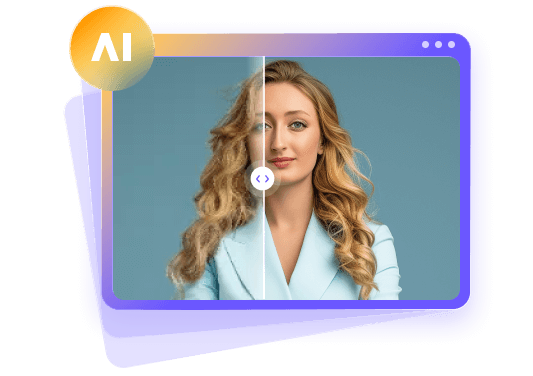
HitPaw FotorPea is a viable alternative for those who need to have their images improved with visible results without the need to master a RAW workflow. It also has an AI Enhancer that focuses on automated correction: the user can import an image, switch to Auto or Custom mode, preview the output, and export it, unlike Lightroom or DxO PhotoLab. FotorPea 5.6.0 also introduces low-light enhancement and reflection removal, which further expands its application in the field of everyday photos. This can help creators, online sellers, students, and casual photographers.
Key Features
- AI Upscaling: Upscales low-resolution images, improving their clarity, and offers certain high-resolution options.
- Denoise and Low-Light Enhancement: Denoises images and recovers detail and brightness in dark or underexposed images.
- Face Restoration: Removes the blur on faces in portraits or old or poor-quality photos.
- Sharpen and Deblur: Motion, lens, and compression blur are targeted, and a clear image is created.
- Auto and Custom Modes: Auto Mode suggests an improvement strategy, whereas Custom Mode allows users to choose particular AI models to be more in control.
 Pros
Pros
- Easy-to-use, mostly automated workflow.
- Several improvement activities within an application.
- The preview is available prior to exporting.
- Multi-image saving of time on batch enhancement.
 Cons
Cons
- Not as compatible with more advanced cataloguing as Lightroom.
- The results of AI may differ, depending on the quality of the source.
- There are those photographers who might be more inclined towards manual control.
Best use: Applications that users need to be fast and simple, restore, upscale and/or enhance with AI assistance rather than complex professional photo-management workflows.
How to Enhance Images with HitPaw FotorPea
Step 1. Download HitPaw FotorPea and import your image.




Step 2. Choose Auto Mode or Custom Mode.
Choose Auto Mode when you want FotorPea to examine the image and suggest a suitable enhancement model. To have greater control, select Custom Mode and pick the tool.
Step 3. Select the suitable AI enhancement model.
Face Restoration can be used to restore portraits, Denoise to remove noise in images, Sharpen to sharpen blurry images, AI Upscale to enhance image resolution, AI Color to remove or fix color and others based on the issue with the image.
Step 4. Adjust settings and preview the result.
In the case of AI Upscale, FotorPea will enable you to select degrees of enlargement: 1X, 2X, 4X, and 8X. Once the desired settings are chosen, preview the image and assess the improved image alongside the original image to determine whether the image is sharp and detailed, and whether colors and noise are reduced in a natural manner.
Step 5. Export the enhanced image.
After being happy with the preview, set the output format and other export options, and click the Export button, followed by saving the final image. FotorPea also offers the possibility of storing EXIF data like camera parameters and details of the shoot.
DxO PhotoLab vs Lightroom vs HitPaw FotorPea: Which One Should You Choose?
| Factor | DxO PhotoLab | Lightroom | HitPaw FotorPea |
|---|---|---|---|
| Image Quality | Good quality RAW and lens correction. | Excellent professional editing | Strong AI enhancement |
| Speed | Moderate | Fast | Very fast |
| Ease of Use | Moderate learning curve | Easy to moderate | Very easy |
| Editing Control | Advanced RAW controls | Rapid manual and AI technologies. | AI tools, most of which are automated. |
| Pricing Model | Perpetual license | Subscription | Paid plans |
| Best For | RAW-focused photographers | Multi-device workflows and professionals. | Quick AI photo enhancement |
In summary: DxO PhotoLab is ideal for photographers who value RAW quality, Lightroom is more suitable for overall professional workflows, and HitPaw FotorPea is perfect when one needs a quick and easy AI-based enhancing tool.
FAQs About DxO PhotoLab vs Lightroom
The images that have high demand RAW and high-ISO images prove to be of great help to DxO PhotoLab since its DeepPRIME algorithm can denoise and demosaic to remove noise and retain fine details and color. The AI Denoise in Lightroom is also really good and does not blur out details; hence, the difference may be determined by the camera, the photo and the result that is needed.
Lightroom provides a more extensive editing ecosystem, such as AI-based masking, Generative Remove, presets, local editing, and smooth desktop/mobile editing. DxO PhotoLab is more focused on the processing of RAW files, U Point local corrections, AI Masks, DeepPRIME, and lens-specific corrections.
Lightroom is typically simpler to learn as it has a simpler workflow and an in-built step-by-step teaching on learning the editing tools. PhotoLab is user-friendly, yet reveals more advanced RAW and optical correction options that can require more time to learn.
Yes, PhotoLab can replace Lightroom with those photographers primarily concerned with desktop RAW editing, local file organization, denoising, and lens correction. Lightroom is, however, more appropriate when you largely depend on cloud storage, mobile editing, and automatic desktop, mobile, and web synchronicity.
It may be less expensive in the long term since PhotoLab 9 operates under a perpetual-license business model, whereas in Lightroom, there should be a continuous subscription fee. PhotoLab 9 is today available at DxO at a price of $239.99, whilst the U.S. annual version of Lightroom 1TB costs $14.99/month when billed monthly, but again, depending on your location and potential future upgrade expenses may alter the comparison.
Conclusion
DxO PhotoLab is better for RAW, noise reduction, and lens correction, whereas Lightroom has a better overall workflow with cloud, organization, and advanced editing capabilities. The more appropriate option between DxO PhotoLab vs Lightroom is based on your preference for either opting to have maximum RAW quality or a flexible professional editing ecosystem. HitPaw FotorPea is the most approachable balance of speed and simplicity for users wishing to have fast, easy, and AI-powered image improvement without complicated controls.
Leave a Comment
Create your review for HitPaw articles